 ChipApex | Global Electronic Components Supplier
SEARCH
Search Product
Search Post
— IC芯片 | 连接器 | 传感器 | 被动器件 —
Search productSearch post
— IC芯片 | 连接器 | 传感器 | 被动器件 —
Consult the customer manager about the wholesale price.
consultation hotline:86-132-6715-2157
email:[email protected]
Contact the product manager for consultation. One-stop consultation is available.
Do you want a lower wholesale price? Please send us your inquiry and we will reply immediately.
The onsemi 74F193SCX is a 4-bit synchronous up/down binary counter housed in a 16-lead Small Outline Integrated Circuit (SOIC) package. It features separate Count Up and Count Down clock inputs, operating synchronously with LOW-to-HIGH transitions. The device includes asynchronous Master Reset and Parallel Load capabilities, allowing immediate state overrides independent of clock signals. Terminal Count outputs facilitate multi-stage expansion without additional logic. Recommended operating conditions specify a supply voltage range of +4.5V to +5.5V and an ambient temperature range of 0°C to +70°C.
Verify the specific ordering suffix 'X' indicates tape and reel packaging availability as documented in the datasheet notes. Confirm the package type corresponds to the M16A designation for the 16-lead SOIC variant. Ensure compatibility with the recommended operating conditions regarding supply voltage and ambient temperature ranges before integration into final assemblies.
Select this component when synchronous operation is required for both up and down counting modes. The separate clock inputs allow independent control of count direction, simplifying interface logic compared to single-clock reversible counters. The presence of dedicated terminal count outputs reduces external gate requirements for cascading multiple stages, optimizing board space and design complexity.
This part belongs to the 74F series of high-speed logic devices, originally manufactured by Fairchild Semiconductor. The 74F193 specifically addresses applications needing fast, synchronous bidirectional counting. The SCX designation identifies the specific surface-mount package configuration within this product line, distinguishing it from through-hole or other surface-mount variants like SOP or PDIP.
Direct functional substitutes include other 74F193 variants such as the 74F193SJ or 74F193PC, differing primarily in package style rather than electrical function. Verify pinout compatibility and package dimensions when substituting between SOIC, SOP, and PDIP formats to ensure mechanical fit.
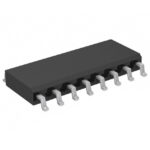 74F193SCX
The activity of extra discounts on wholesale prices is in full swing…
Please fill in your contact information and we will send you the latest wholesale price list.





