 ChipApex | Global Electronic Components Supplier
SEARCH
Search Product
Search Post
— IC芯片 | 连接器 | 传感器 | 被动器件 —
Search productSearch post
— IC芯片 | 连接器 | 传感器 | 被动器件 —
Consult the customer manager about the wholesale price.
consultation hotline:86-132-6715-2157
email:[email protected]
Contact the product manager for consultation. One-stop consultation is available.
Do you want a lower wholesale price? Please send us your inquiry and we will reply immediately.
The Fairchild Semiconductor 74F299PC is an 8-bit parallel-in/parallel-out shift register belonging to the F/FAST logic series. It features bidirectional shifting capability and true outputs housed in a 20-pin plastic DIP package. The device operates with TTL input compatibility and provides three-state output control. Key functional attributes include a hold mode, common I/O pins for data transfer, and gated output control. The component supports a maximum supply voltage of 5.25 V and exhibits a propagation delay of 12 ns.
Verify the specific manufacturer lot and date code upon receipt, as Rochester Electronics often distributes surplus inventory from various original manufacturers. Confirm that the PDIP-20 package dimensions match your PCB footprint requirements. Ensure the operating temperature range meets your system's environmental specifications, noting the upper limit of 70 °C for this variant.
Select this component when an 8-bit shift register with bidirectional capabilities and common I/O pins is required. The F/FAST series offers a balance of speed and power consumption suitable for general digital logic applications. Consider the 20-pin DIP package for through-hole prototyping or legacy board designs. Verify TTL input compatibility if interfacing with older logic families.
This part belongs to the broader 74F family of high-speed CMOS logic devices originally developed by Fairchild Semiconductor. The 74F299 specifically addresses applications needing versatile data storage and movement. Similar variants exist in ceramic packages (e.g., 74F299DC) or different logic families like AC/ACT, which offer varying speed and power characteristics while maintaining similar pinouts and functions.
The CD74AC299 serves as a compatible alternative within the same functional category. While it shares the 8-bit parallel-in/parallel-out architecture and common I/O structure, it utilizes CMOS technology rather than the F/FAST bipolar-CMOS hybrid. Verify voltage levels and propagation delays to ensure compatibility with existing circuit timing constraints.
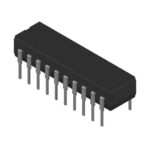 74F299PC
The activity of extra discounts on wholesale prices is in full swing…
Please fill in your contact information and we will send you the latest wholesale price list.





