 ChipApex | Global Electronic Components Supplier
SEARCH
Search Product
Search Post
— IC芯片 | 连接器 | 传感器 | 被动器件 —
Search productSearch post
— IC芯片 | 连接器 | 传感器 | 被动器件 —
Consult the customer manager about the wholesale price.
consultation hotline:86-132-6715-2157
email:[email protected]
Contact the product manager for consultation. One-stop consultation is available.
Do you want a lower wholesale price? Please send us your inquiry and we will reply immediately.
The Fairchild Semiconductor 74F299SJX is an octal bidirectional shift register belonging to the F/FAST series. It features parallel-in, parallel-out functionality with true outputs and operates on TTL logic levels. The device utilizes a 20-pin Small Outline Package (SOP) with a plastic body. Key electrical parameters include a maximum supply voltage of 5.5 V, a minimum supply voltage of 4.5 V, and a nominal supply voltage of 5 V. The propagation delay is specified at 12 ns. The component supports a bidirectional counting direction and includes hold mode capabilities.
Verify the specific suffix designation against manufacturer documentation to confirm package type and material composition. Ensure compatibility with existing board layouts regarding pin pitch and footprint dimensions. Confirm that the operating temperature range meets system requirements. Validate that the TTL logic level inputs align with the driving source voltages. Check for any lead-free or environmental compliance markings if required by local regulations.
Select this component when high-speed bidirectional shifting is required within standard TTL voltage ranges. The F/FAST series offers faster performance compared to standard logic families while maintaining CMOS power characteristics. Consider the SOP-20 package constraints for surface mount assembly processes. Evaluate the 12 ns propagation delay against system timing budgets to ensure signal integrity. Verify that the 3-state output capability matches the bus architecture requirements.
This part belongs to the 74F series of high-speed Schottky logic devices manufactured by Fairchild Semiconductor. The 74F299 specifically implements an octal bidirectional shift register function. It is designed for applications demanding rapid data movement and storage. The device integrates multiple flip-flops into a single package to optimize space and interconnect density.
Check for equivalent parts from ON Semiconductor following the Fairchild integration. Verify pinout compatibility before substitution. Ensure logical function matches the original design requirements.
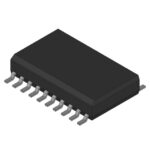 74F299SJX
The activity of extra discounts on wholesale prices is in full swing…
Please fill in your contact information and we will send you the latest wholesale price list.





