 ChipApex | Global Electronic Components Supplier
SEARCH
Search Product
Search Post
— IC芯片 | 连接器 | 传感器 | 被动器件 —
Search productSearch post
— IC芯片 | 连接器 | 传感器 | 被动器件 —
Consult the customer manager about the wholesale price.
consultation hotline:86-132-6715-2157
email:[email protected]
Contact the product manager for consultation. One-stop consultation is available.
Do you want a lower wholesale price? Please send us your inquiry and we will reply immediately.
The onsemi 74F382PC is a 4-bit Arithmetic Logic Unit (ALU) housed in a 20-lead Plastic Dual-In-Line Package (PDIP). It performs arithmetic and logic operations on two 4-bit words, A and B. The device operates within a supply voltage range of +4.5V to +5.5V and supports an ambient temperature range of 0°C to +70°C. Key electrical parameters include a maximum propagation delay of 17.5ns from Select inputs to Function outputs at 0°C. The circuit provides a Carry output for ripple expansion and an Overflow output for two's complement arithmetic.
Verify the package type matches the required footprint, as the 74F382 series includes SOIC and SOP variants alongside the PDIP option. Confirm that the operating temperature range meets system requirements, as this specific part number is rated for commercial temperatures only. Ensure compatibility with existing logic families regarding input loading and drive capabilities before finalizing procurement.
Select this component when a 4-bit ALU with explicit overflow and carry outputs is required for parallel data processing. Consider the propagation delays relative to system clock speeds, particularly for paths involving Select inputs or Carry chains. Evaluate the unit loading characteristics to ensure downstream drivers can handle the specified current loads without signal degradation.
The 74F382 belongs to the 74F logic family, characterized by high-speed performance compared to standard TTL. Originally manufactured by Fairchild Semiconductor, the product line was acquired by onsemi. This specific model serves as a fundamental building block for digital arithmetic circuits, offering a balance of speed and functional versatility for general-purpose computing tasks.
Direct substitutes may include other 74F-series 4-bit ALUs from different manufacturers. Verify pinout compatibility and electrical specifications such as propagation delay and power consumption. Note that while functionally similar, variations in packaging or temperature ratings may require design adjustments.
The Overflow output (OVR) is generated by the Exclusive-OR of the carry into the most significant bit (Cn+3) and the carry out of the most significant bit (Cn+4). A HIGH signal indicates an overflow in two's complement operation.
For Subtract operating modes, it is necessary to force a carry into the Cn input of the least significant package. For active HIGH operands, this requires a HIGH signal; for active LOW operands, a LOW signal is required.
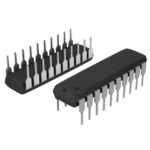 74F382PC
The activity of extra discounts on wholesale prices is in full swing…
Please fill in your contact information and we will send you the latest wholesale price list.






