 ChipApex | Global Electronic Components Supplier

SEARCH
Search Product
Search Post
— IC芯片 | 连接器 | 传感器 | 被动器件 —
Search productSearch post
— IC芯片 | 连接器 | 传感器 | 被动器件 —
Consult the customer manager about the wholesale price.
consultation hotline:86-132-6715-2157
email:[email protected]
Contact the product manager for consultation. One-stop consultation is available.
Do you want a lower wholesale price? Please send us your inquiry and we will reply immediately.
The Fairchild Semiconductor 74F899SC is a high-performance, non-inverting 9-bit latchable transceiver featuring integrated parity generation and checking capabilities. Designed for robust digital logic applications, it operates within a supply voltage range of 4.5V to 5.5V. The device utilizes a 28-pin SOIC package and supports 3-state outputs. It delivers an output current capability of 3mA in the high state and 64mA in the low state, ensuring reliable signal transmission in fast bipolar logic systems.
Verify the manufacturer designation as Fairchild Semiconductor or its successor entity onsemi when sourcing components. Confirm the specific suffix 'SC' corresponds to the 28-SOIC package variant. Ensure compatibility with standard 5V logic levels and check for any obsolescence notices from the original manufacturer before finalizing procurement plans.
Select this component when a system requires simultaneous data latching and parity validation in a single integrated circuit. The 9-bit width accommodates standard byte-plus-parity configurations. Consider the 3-state output feature if multiple devices share a common data bus. Verify that the required operating speed aligns with the Fast/Faster Bipolar Logic specifications provided in the official datasheet.
This device belongs to the 74F series of high-speed bipolar logic ICs. It serves as a specialized transceiver combining data transfer and error checking functionalities. The part is distinct from standard shift registers or simple buffers due to its built-in parity logic and latchable architecture, making it suitable for complex digital interface designs.
Publicly confirmed substitute part numbers are not available in the provided documentation. Evaluate equivalent 9-bit latchable transceivers with parity features from other manufacturers only after verifying pinout compatibility and electrical parameter alignment with the original specifications.
The integrated circuit includes logic circuits that generate parity bits during data transmission and check incoming data for parity errors, ensuring data integrity across the 9-bit bus.
No, the device is specified as a non-inverting transceiver, meaning the output signals maintain the same logical state as the inputs when enabled.
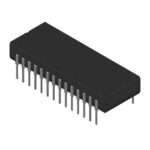 74F899SC

The activity of extra discounts on wholesale prices is in full swing…
Please fill in your contact information and we will send you the latest wholesale price list.





