 ChipApex | Global Electronic Components Supplier
SEARCH
Search Product
Search Post
— IC芯片 | 连接器 | 传感器 | 被动器件 —
Search productSearch post
— IC芯片 | 连接器 | 传感器 | 被动器件 —
Consult the customer manager about the wholesale price.
consultation hotline:86-132-6715-2157
email:[email protected]
Contact the product manager for consultation. One-stop consultation is available.
Do you want a lower wholesale price? Please send us your inquiry and we will reply immediately.
The National Semiconductor 74FCT377PC is an octal D-type flip-flop featuring clock enable functionality. It operates within a supply voltage range of 4.5V to 5.5V and supports through-hole mounting in a 20-pin PLCC package. The device provides true outputs with high impedance states during power-up and power-down cycles, ensuring glitch-free bus loading. It includes latchup protection and is designed for positive edge-triggered operation with individual data inputs and corresponding Q outputs.
Verify component authenticity due to potential availability from multiple distributors after original manufacturer transitions. Confirm package integrity and pin alignment for the 20-pin PLCC form factor. Check RoHS compliance status as legacy parts may vary by production batch. Ensure storage conditions meet moisture sensitivity level requirements before reflow or insertion. Validate datasheet revisions against specific manufacturing date codes for accurate electrical characteristics.
Select this component when octal storage with independent clock enable is required in through-hole designs. Compare propagation delay specifications against system timing constraints at 5V operation. Evaluate current drive capabilities relative to load requirements on parallel buses. Consider thermal performance within the specified operating temperature range. Verify compatibility with existing logic families and voltage levels in the target circuit design.
This part belongs to the FCT (Fast CMOS Technology) series, bridging TTL speed with CMOS low power consumption. It serves as a standard octal register in legacy digital designs. The PLCC package offers compact surface-mount-like density with through-hole compatibility. National Semiconductor's FCT line was widely adopted for high-speed parallel interfaces before transitioning to newer technology nodes.
Cross-reference with SN74FCT377PC or similar octal D-flip-flops with clock enable. Verify pinout compatibility and electrical parameters match original specifications. Check for equivalent latchup protection and output drive strength. Confirm package dimensions align with existing PCB footprints. Review manufacturer documentation for any functional differences in clock enable behavior.
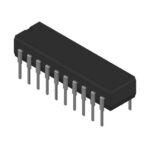 74FCT377PC
The activity of extra discounts on wholesale prices is in full swing…
Please fill in your contact information and we will send you the latest wholesale price list.





