 ChipApex | Global Electronic Components Supplier
SEARCH
Search Product
Search Post
— IC芯片 | 连接器 | 传感器 | 被动器件 —
Search productSearch post
— IC芯片 | 连接器 | 传感器 | 被动器件 —
Consult the customer manager about the wholesale price.
consultation hotline:86-132-6715-2157
email:[email protected]
Contact the product manager for consultation. One-stop consultation is available.
Do you want a lower wholesale price? Please send us your inquiry and we will reply immediately.
The 74FST3245Q is an octal bus switch manufactured by IDT, Integrated Device Technology Inc. It features eight independent 1:1 bidirectional bus switches implemented in high-performance, low-power CMOS technology. The device operates on a single supply voltage and is designed for applications requiring high-speed data transfer with TTL-compatible logic levels. It is housed in a 20-SSOP package with a width of 3.90mm (0.154 inches). The component supports an operating temperature range from -40°C to 85°C and complies with RoHS standards.
Verify the manufacturer designation as IDT or Renesas Electronics, noting that IDT has been acquired by Renesas. Confirm the specific package variant matches the 20-QSOP/20-SSOP specification. Ensure the part status is active if long-term availability is required. Cross-reference the datasheet to confirm pinout compatibility with standard 74FCT245 or 74F245 footprints if substituting into existing designs.
Select this component when an octal bidirectional bus switch is required for systems utilizing TTL-compatible logic. The choice is driven by the need for low power consumption combined with high-speed performance characteristics inherent to FST technology. Consider the 20-SSOP package constraints for PCB layout. Verify that the single supply voltage requirement aligns with the system's power rails before finalizing the design integration.
This component belongs to the 74FST series of high-speed CMOS logic devices. It serves as a functional equivalent to other octal bus transceivers like the 74FCT245 and 74F245, offering pinout compatibility while leveraging advanced FST technology for improved speed and power efficiency. The Q suffix typically denotes industrial temperature range compliance in many semiconductor naming conventions.
Publicly confirmed substitutes include the QS3245, which offers pinout compatibility with 74FCT245, 74F245, and 74ALS/AS/LS245 devices. Designers should verify electrical parameter alignment and package dimensions before swapping components to ensure mechanical and functional compatibility within the target circuit.
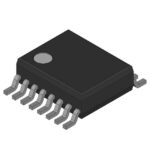 74FST3245Q
The activity of extra discounts on wholesale prices is in full swing…
Please fill in your contact information and we will send you the latest wholesale price list.





