 ChipApex | Global Electronic Components Supplier
SEARCH
Search Product
Search Post
— IC芯片 | 连接器 | 传感器 | 被动器件 —
Search productSearch post
— IC芯片 | 连接器 | 传感器 | 被动器件 —
Consult the customer manager about the wholesale price.
consultation hotline:86-132-6715-2157
email:[email protected]
Contact the product manager for consultation. One-stop consultation is available.
Do you want a lower wholesale price? Please send us your inquiry and we will reply immediately.
The Nexperia 74HC123D/AUJ is a dual retriggerable monostable multivibrator with reset, manufactured by Nexperia. It operates within a supply voltage range of 2.0 V to 6.0 V and supports an ambient temperature range from -40 °C to +125 °C. The device features Schmitt-trigger action on inputs nA and nB for noise immunity and includes clamp diodes for input protection. It provides complementary active HIGH (nQ) and active LOW (nQ) outputs. Pulse width is controlled via external resistor (REXT) and capacitor (CEXT), allowing extension through retriggering or immediate termination via the direct reset input (nRD).
Verify that the specific ordering suffix 'AUJ' corresponds to the SO16 package (SOT109-1) as documented in the official datasheet. Confirm compliance with RoHS directives and JEDEC standards JESD8C and JESD7A during procurement. Ensure the component meets the specified operating temperature range of -40 °C to +125 °C for your application environment.
Select this component when a dual-channel monostable multivibrator with Schmitt-trigger inputs is required. It is suitable for CMOS logic families and offers LSTTL pin compatibility. Consider the wide supply voltage range and high noise immunity for robust operation in noisy environments requiring precise pulse timing control.
This component belongs to the 74HC/HCT series of high-speed Si-gate CMOS devices. It is designed to be pin-compatible with Low-power Schottky TTL (LSTTL) logic families. The device complies with JEDEC standard no. 7A and is part of Nexperia's extensive portfolio of logic integrated circuits.
Public confirmed substitute part numbers include 74HCT123D-Q100 and 74HC123PW,118. Verify package type and electrical specifications before substitution.
The basic output pulse width is programmed by the selection of external components, specifically the external resistor (REXT) and capacitor (CEXT).
Yes, the basic output pulse width may be extended by retriggering either of the edge-triggered inputs (nA or nB).
The nRD input serves as a direct reset; applying a LOW-going edge to this input terminates the output pulse at any time.
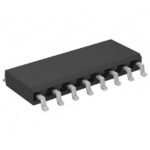 74HC123D/AUJ
The activity of extra discounts on wholesale prices is in full swing…
Please fill in your contact information and we will send you the latest wholesale price list.





