 ChipApex | Global Electronic Components Supplier

SEARCH
Search Product
Search Post
— IC芯片 | 连接器 | 传感器 | 被动器件 —
Search productSearch post
— IC芯片 | 连接器 | 传感器 | 被动器件 —
Consult the customer manager about the wholesale price.
consultation hotline:86-132-6715-2157
email:[email protected]
Contact the product manager for consultation. One-stop consultation is available.
Do you want a lower wholesale price? Please send us your inquiry and we will reply immediately.
The Nexperia 74HC132BQX is a quad 2-input NAND gate with Schmitt-trigger inputs, housed in a DHVQFN-14 package (SOT762-1). It operates within a supply voltage range of 2.0 V to 6.0 V and supports an ambient temperature range from -40 °C to +125 °C. The device features low power dissipation, high noise immunity, and unlimited input rise and fall times. Inputs include clamp diodes for interfacing with voltages exceeding VCC. Latch-up performance exceeds 100 mA per JESD 78 Class II Level B.
Verify the specific ordering suffix against the manufacturer's latest documentation to confirm package type and tape/reel specifications. Ensure the component version matches the required JEDEC standards and ESD protection levels for the target application environment. Cross-reference the part number with official distributor catalogs to validate availability and compliance status before finalizing procurement orders.
Select this component when designing circuits requiring noise-immune logic gates capable of handling slow input transitions without generating output jitter. The DHVQFN-14 package is suitable for applications demanding space-efficient surface-mount solutions. Verify that the operating voltage and temperature ranges align with system requirements, noting the device's capability to withstand latch-up currents exceeding 100 mA.
The 74HC132BQX belongs to the 74HC series of high-speed CMOS logic devices manufactured by Nexperia. It is functionally equivalent to other 74HC132 variants but utilizes the DHVQFN-14 leadless package (SOT762-1). This family provides quad 2-input NAND gates with Schmitt-trigger inputs, offering robust performance in digital signal processing and timing applications across industrial and commercial temperature ranges.
Direct replacements include the 74HC132D (SO14 package) and 74HC132PW (TSSOP14 package). These alternatives share identical logical functionality and electrical specifications but differ in physical footprint and pinout orientation. Verify mechanical compatibility and thermal dissipation requirements when substituting between package types.
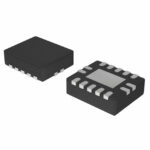 74HC132BQX

The activity of extra discounts on wholesale prices is in full swing…
Please fill in your contact information and we will send you the latest wholesale price list.




