 ChipApex | Global Electronic Components Supplier

SEARCH
Search Product
Search Post
— IC芯片 | 连接器 | 传感器 | 被动器件 —
Search productSearch post
— IC芯片 | 连接器 | 传感器 | 被动器件 —
Consult the customer manager about the wholesale price.
consultation hotline:86-132-6715-2157
email:[email protected]
Contact the product manager for consultation. One-stop consultation is available.
Do you want a lower wholesale price? Please send us your inquiry and we will reply immediately.
The Nexperia 74HC14BQ,115 is a hex inverting Schmitt trigger integrated circuit manufactured by Nexperia USA Inc. It operates within a supply voltage range of 2.0 V to 6.0 V and features CMOS low power dissipation with high noise immunity. The device includes clamp diodes on inputs, allowing interfacing to voltages exceeding VCC via current limiting resistors. It transforms slowly changing input signals into sharply defined, jitter-free output signals. The component is specified for operation from -40 °C to +125 °C and complies with JEDEC standards JESD8C and JESD7A.
Verify the specific ordering suffix '115' corresponds to the DHVQFN14 package (SOT762-1) as documented in the official datasheet. Confirm that the required temperature range covers the full industrial specification up to +125 °C. Ensure design compliance with the absolute maximum ratings regarding supply voltage limits and total power dissipation derating curves provided in the product data sheet.
Select this component when application requirements demand robust noise immunity through Schmitt-trigger action or when interfacing with signals exhibiting slow transition times. The wide supply voltage compatibility allows flexibility in system power architectures. Verify that the DHVQFN14 package dimensions align with the PCB footprint constraints and thermal management requirements of the target assembly process.
This part belongs to the 74HC logic family, which offers performance compatible with Low-power Schottky TTL (LSTTL). The 'BQ' designation identifies the specific DHVQFN14 plastic dual-in-line compatible thermal enhanced very thin quad flat package variant. This packaging option provides a compact form factor suitable for space-constrained surface-mount designs while maintaining standard pinout compatibility with other devices in the series.
Cross-reference with other manufacturers offering 74HC14 equivalents in DHVQFN14 packages. Verify pinout compatibility and electrical parameter alignment, particularly propagation delay and supply voltage ranges, before substitution.
Yes, the inputs include clamp diodes that allow interfacing to voltages in excess of VCC, provided current limiting resistors are used to protect the device.
The Schmitt-trigger inputs introduce hysteresis, which transforms slowly changing input signals into sharply defined, jitter-free output signals, thereby improving noise immunity.
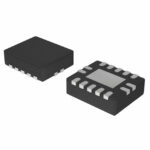 74HC14BQ,115

The activity of extra discounts on wholesale prices is in full swing…
Please fill in your contact information and we will send you the latest wholesale price list.





