 ChipApex | Global Electronic Components Supplier
SEARCH
Search Product
Search Post
— IC芯片 | 连接器 | 传感器 | 被动器件 —
Search productSearch post
— IC芯片 | 连接器 | 传感器 | 被动器件 —
Consult the customer manager about the wholesale price.
consultation hotline:86-132-6715-2157
email:[email protected]
Contact the product manager for consultation. One-stop consultation is available.
Do you want a lower wholesale price? Please send us your inquiry and we will reply immediately.
The Toshiba Semiconductor and Storage 74HC175D is a quad D-type flip-flop belonging to the 74HC CMOS logic IC series. It features four independent D-type flip-flops with positive-edge triggering within a single integrated circuit. The device operates on a supply voltage range of 2 V to 6 V and utilizes an SOIC-16 surface-mount package. Key electrical specifications include a maximum clock frequency of 63 MHz, a propagation delay of 16 ns at 5 V, and output drive currents of ±5.2 mA. It supports a wide operating temperature range from -40 °C to +125 °C.
Verify the specific manufacturer suffix and revision status when sourcing, as part number revisions may occur without functional changes. Confirm RoHS compliance and moisture sensitivity levels against current project requirements. Ensure the SOIC-16 package dimensions match the PCB footprint design. Cross-reference datasheet electrical characteristics with system timing constraints before finalizing procurement decisions.
Select this component for designs requiring multiple synchronized storage elements in a compact surface-mount form factor. The HC series offers balanced speed and power consumption compared to other logic families. Consider the 6 V maximum rating when designing for higher voltage environments. Verify that the input logic levels are compatible with the driving source across the entire operating voltage range.
This component is part of the extensive 74HC family of high-speed CMOS logic devices manufactured by Toshiba Semiconductor and Storage. The 74HC175 specifically addresses the need for multi-bit storage within a single package, reducing board space compared to discrete flip-flops. It serves as a fundamental building block for complex sequential logic circuits in consumer electronics and industrial control systems.
The 74HC175D(BJ) is listed as an alias or previous part number variant for this component. Other manufacturers produce pin-compatible equivalents such as the NXP 74HCT175, though HCT logic requires different input voltage thresholds. Verify package compatibility and electrical specifications when substituting with parts from different vendors.
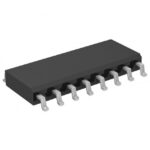 74HC175D
The activity of extra discounts on wholesale prices is in full swing…
Please fill in your contact information and we will send you the latest wholesale price list.





