 ChipApex | Global Electronic Components Supplier

SEARCH
Search Product
Search Post
— IC芯片 | 连接器 | 传感器 | 被动器件 —
Search productSearch post
— IC芯片 | 连接器 | 传感器 | 被动器件 —
Consult the customer manager about the wholesale price.
consultation hotline:86-132-6715-2157
email:[email protected]
Contact the product manager for consultation. One-stop consultation is available.
Do you want a lower wholesale price? Please send us your inquiry and we will reply immediately.
The Nexperia 74HC1G08GZ-Q100YL is a single 2-input AND gate integrated circuit designed for automotive applications. It operates within a supply voltage range of 2.0 V to 6.0 V and features low power consumption with high noise immunity. The device is qualified to AEC-Q100 Grade 1 standards, ensuring reliability in harsh environments. It utilizes a compact 5-XSON package measuring 1.1 x 0.85 mm, suitable for space-constrained designs. The logic family provides symmetrical output impedance and unlimited input rise/fall times.
Verify the specific suffix YL against official Nexperia documentation to confirm exact tape-and-reel specifications or marking variations. Ensure the component meets AEC-Q100 Grade 1 requirements for your target automotive application environment. Cross-reference the 5-XSON footprint dimensions with your PCB design library to guarantee mechanical compatibility during assembly.
Select this component when a single 2-input AND function is required in automotive systems operating between 2V and 6V. The 5-XSON package offers a smaller footprint compared to TSSOP alternatives like the 74HC1G08GW variant. Consider the HC series speed and drive capabilities relative to LVC options if lower voltage operation or higher current drive is needed for the specific interface requirements.
This part belongs to the Nexperia 74HC1Gxx-Q100 family of single-gate automotive logic devices. It shares functional similarities with other packages in the series, such as the GW (TSSOP) and GV (SC-74A) variants, but differs in physical dimensions. The XSON package provides a distinct mechanical profile optimized for miniaturization while maintaining electrical performance consistent with the broader 74HC standard.
Direct pin-compatible substitutes include the 74HC1G08GW-Q100 and 74HC1G08GV-Q100 from Nexperia, provided the package change is acceptable. Other manufacturers offering JEDEC-compliant 74HC single AND gates may serve as functional equivalents if automotive qualification is not strictly mandated by the final system design.
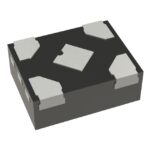 74HC1G08GZ-Q100YL

The activity of extra discounts on wholesale prices is in full swing…
Please fill in your contact information and we will send you the latest wholesale price list.




