 ChipApex | Global Electronic Components Supplier
SEARCH
Search Product
Search Post
— IC芯片 | 连接器 | 传感器 | 被动器件 —
Search productSearch post
— IC芯片 | 连接器 | 传感器 | 被动器件 —
Consult the customer manager about the wholesale price.
consultation hotline:86-132-6715-2157
email:[email protected]
Contact the product manager for consultation. One-stop consultation is available.
Do you want a lower wholesale price? Please send us your inquiry and we will reply immediately.
The 74HC273N,652 is an octal positive-edge triggered D-type flip-flop manufactured by Nexperia. It features a common clock and master reset input, with outputs assuming the state of corresponding data inputs on the LOW-to-HIGH clock transition. The device operates within a supply voltage range of 2 V to 6 V and supports a maximum frequency of 20 MHz at nominal supply. It includes clamp diodes on inputs for interfacing with voltages exceeding VCC using current-limiting resistors. The component is housed in a 20-pin PDIP package and functions as a single-function logic IC.
Verify the manufacturer designation carefully, as the product line formerly belonged to NXP Semiconductor before becoming Nexperia B.V. Confirm the specific ordering suffix matches the required packaging and compliance standards. Ensure compatibility with existing schematic designs referencing the original brand name. Check for any recent lifecycle status updates regarding availability or obsolescence warnings from the current supplier.
Select this component when an octal storage solution with a global reset is required. It is suitable for applications needing CMOS-level input compatibility and operation across a wide voltage range. Consider the propagation delay characteristics relative to system timing requirements. Verify that the DIP-20 package fits the available board space and manufacturing constraints.
This part belongs to the 74HC series of high-speed CMOS logic devices. It is functionally similar to other octal D-type flip-flops like the 74HC374 but lacks tri-state outputs. The device is designed for general-purpose digital logic applications where reliable data latching and resetting are essential. It complements other 74HC family components for building complex sequential logic systems.
Direct substitutes include the 74HCT273N for TTL-compatible input levels. Other compatible parts may include variants from different manufacturers offering identical pinouts and logical functions. Verify electrical specifications such as output drive current and propagation delay before swapping.
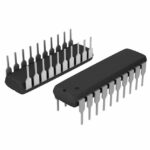 74HC273N,652
The activity of extra discounts on wholesale prices is in full swing…
Please fill in your contact information and we will send you the latest wholesale price list.





