 ChipApex | Global Electronic Components Supplier

SEARCH
Search Product
Search Post
— IC芯片 | 连接器 | 传感器 | 被动器件 —
Search productSearch post
— IC芯片 | 连接器 | 传感器 | 被动器件 —
Consult the customer manager about the wholesale price.
consultation hotline:86-132-6715-2157
email:[email protected]
Contact the product manager for consultation. One-stop consultation is available.
Do you want a lower wholesale price? Please send us your inquiry and we will reply immediately.
The Nexperia 74HC3GU04DC,125 is a triple unbuffered inverter from the 74HC series. It operates within a supply voltage range of 2.0 V to 6.0 V and supports an ambient temperature range of -40 °C to +125 °C. The device features inputs with clamp diodes for interfacing with voltages exceeding VCC. It provides symmetrical output impedance and balanced propagation delays. Static characteristics include input leakage current up to ±1.0 μA at 6.0 V and quiescent supply current up to 20 μA. Dynamic performance specifies propagation delay maximums of 90 ns at 2.0 V, 18 ns at 4.5 V, and 15 ns at 6.0 V across the extended temperature range.
Verify the specific ordering suffix DC corresponds to the VSSOP-8 package (SOT765-1) required for the design. Confirm that the component is not automotive qualified, as standard Nexperia products lack AEC-Q100 certification unless explicitly stated. Ensure the application environment remains within the specified -40 °C to +125 °C operating temperature range to maintain electrical specifications.
Select this component when a compact triple inverter solution is needed for HC-speed applications. The VSSOP-8 package offers space efficiency compared to larger footprints. Consider the input clamp diode feature if interfacing with signals potentially exceeding the supply rail. Verify that the 2.0 V minimum supply voltage meets the system requirements, as lower voltage operation is not supported by this specific logic family.
This part belongs to the 74HC3GUxx family of triple unbuffered inverters manufactured by Nexperia. The 'DC' suffix identifies the VSSOP-8 plastic very thin shrink small outline package variant. It shares functional compatibility with other 74HC series inverters but is distinguished by its triple-channel architecture and specific packaging dimensions defined under SOT765-1.
Direct pin-compatible substitutes within the same logic family include the 74HC1G04 variants for single-channel needs or other 74HC3Gxx parts for different logic functions. Cross-family replacements like 74HCT or 74AHC require verification of voltage levels and speed characteristics against the original design constraints.
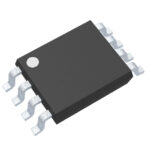 74HC3GU04DC,125

The activity of extra discounts on wholesale prices is in full swing…
Please fill in your contact information and we will send you the latest wholesale price list.





