 ChipApex | Global Electronic Components Supplier
SEARCH
Search Product
Search Post
— IC芯片 | 连接器 | 传感器 | 被动器件 —
Search productSearch post
— IC芯片 | 连接器 | 传感器 | 被动器件 —
Consult the customer manager about the wholesale price.
consultation hotline:86-132-6715-2157
email:[email protected]
Contact the product manager for consultation. One-stop consultation is available.
Do you want a lower wholesale price? Please send us your inquiry and we will reply immediately.
The NXP USA Inc. 74HC4053D/AUJ is a high-speed silicon-gate CMOS triple 2-channel analog multiplexer/demultiplexer. It features three independent switches, each with two inputs/outputs (nY0, nY1) and one common input/output (nZ), controlled by three digital select lines (S0-S2). A common enable input (E) controls the state of all switches simultaneously. The device operates within a supply voltage range of 2.0 V to 10.0 V for logic control. Analog signals can swing between VCC and VEE limits, supporting a wide analog input voltage range from -5 V to +5 V. It includes built-in ESD protection exceeding specified JEDEC standards.
Verify the specific suffix 'AUJ' against official NXP documentation to confirm package type and tape/reel specifications. Ensure the ordering part number matches the exact mechanical dimensions required for the PCB footprint. Confirm RoHS compliance status through the manufacturer's current product change notification records.
Select this component when a triple SPDT analog switch is required with low on-resistance characteristics. Verify that the operating temperature range meets the application environment requirements. Ensure the analog signal voltage does not exceed the supply rails plus diode drop limits to prevent internal clamp diode conduction issues.
This device belongs to the 74HC series of high-speed CMOS logic components. It is pin-compatible with older HEF4053B devices but offers improved switching speeds and lower power consumption. The 74HC family is widely used in general-purpose digital and analog switching applications requiring standard CMOS logic levels.
Direct replacements include the 74HCT4053 for TTL-compatible logic levels or other manufacturers' equivalents such as SN74HC4053. Verify pinout compatibility and electrical parameters before substitution.
When the Enable input is HIGH, all three analog switches are forced into a high-impedance OFF-state, regardless of the state of the select inputs S0 to S2.
The analog inputs/outputs include clamp diodes. If the analog voltage exceeds VCC or goes below VEE, the diodes conduct, potentially requiring external current-limiting resistors to protect the device.
The typical on-resistance varies with the voltage difference between VCC and VEE: approximately 80 Ω at 4.5 V, 70 Ω at 6.0 V, and 60 Ω at 9.0 V.
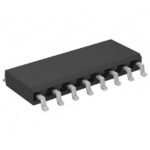 74HC4053D/AUJ
The activity of extra discounts on wholesale prices is in full swing…
Please fill in your contact information and we will send you the latest wholesale price list.





