 ChipApex | Global Electronic Components Supplier
SEARCH
Search Product
Search Post
— IC芯片 | 连接器 | 传感器 | 被动器件 —
Search productSearch post
— IC芯片 | 连接器 | 传感器 | 被动器件 —
Consult the customer manager about the wholesale price.
consultation hotline:86-132-6715-2157
email:[email protected]
Contact the product manager for consultation. One-stop consultation is available.
Do you want a lower wholesale price? Please send us your inquiry and we will reply immediately.
The Renesas Electronics Corporation 74HC534P-E is an octal positive-edge-triggered inverting D-type flip-flop featuring high-speed CMOS logic technology and three-state outputs. It operates within a voltage range of 2V to 6V, supporting nominal voltages of 3.3V and 5V. The device provides a maximum propagation delay of 35ns at nominal voltage and supports a maximum frequency of 28MHz. With a supply current of up to 0.08mA and output drive capabilities of ±7.8mA, it functions reliably across an operating temperature range of -55°C to 125°C.
Verify the specific suffix 'E' against official Renesas documentation to confirm environmental compliance or package variations. Ensure the ordering part number matches the exact pinout and electrical specifications required for your design. Cross-reference with the manufacturer's latest datasheet to confirm availability status and any potential obsolescence notices before finalizing procurement plans.
Select this component when an octal flip-flop with three-state outputs is required for high-speed digital logic applications. Consider the 2V to 6V operating range and 125°C temperature capability for robust performance. Verify that the 35ns propagation delay and 28MHz frequency meet system timing requirements. Ensure compatibility with existing logic families and voltage levels in the target circuit design.
The 74HC534P-E belongs to the Renesas HC series of high-speed CMOS logic devices. This family offers improved speed and lower power consumption compared to standard TTL equivalents. As an octal flip-flop, it serves as a fundamental building block for sequential logic circuits, providing data storage and transfer capabilities in various digital systems.
Compatible substitutes include the CD74HC534 from Texas Instruments and the SN74HC534 from Texas Instruments. These alternatives share similar octal D-type flip-flop functionality with three-state outputs and comparable electrical characteristics. Verify pinout compatibility and voltage specifications before substitution.
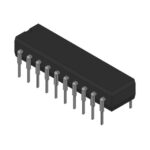 74HC534P-E
The activity of extra discounts on wholesale prices is in full swing…
Please fill in your contact information and we will send you the latest wholesale price list.





