 ChipApex | Global Electronic Components Supplier

SEARCH
Search Product
Search Post
— IC芯片 | 连接器 | 传感器 | 被动器件 —
Search productSearch post
— IC芯片 | 连接器 | 传感器 | 被动器件 —
Consult the customer manager about the wholesale price.
consultation hotline:86-132-6715-2157
email:[email protected]
Contact the product manager for consultation. One-stop consultation is available.
Do you want a lower wholesale price? Please send us your inquiry and we will reply immediately.
The Nexperia 74HCT04PW,118 is a hex inverter integrated circuit manufactured by Nexperia USA Inc. It operates within a supply voltage range of 4.5 V to 5.5 V and features TTL input levels. The device contains six independent inverters housed in a 14-lead TSSOP plastic thin shrink small outline package (SOT402-1). It supports an operating temperature range from -40 °C to +125 °C. Key electrical characteristics include a maximum propagation delay of 19 ns at 4.5 V with a 50 pF load, high noise immunity, and latch-up performance exceeding 100 mA per JESD 78 Class II Level B.
Verify the specific ordering suffix '118' corresponds to the TSSOP14 package variant when sourcing. Confirm RoHS3 compliance status as indicated in distributor documentation. Ensure the procurement channel provides valid traceability for the Nexperia manufacturing origin. Cross-reference the DigiKey part number 1727-4085-2-ND or Mouser equivalents for accurate identification during purchasing.
Select this component when a hex inverter with TTL-compatible input thresholds is required for CMOS outputs. The TSSOP14 package offers a compact surface-mount solution suitable for space-constrained designs. Consider the wide operating temperature range (-40 °C to +125 °C) for industrial environments. Verify that the 4.5 V to 5.5 V supply voltage aligns with the system power architecture before integration.
This part belongs to the 74HCT series of logic ICs, which bridges the gap between older TTL logic families and modern CMOS technology. The 74HCT04 specifically provides six inverters, making it a fundamental building block for digital logic design. It is widely used in microcontroller systems, memory interfaces, and general digital switching applications where reliable signal inversion is necessary.
Direct pin-compatible substitutes include other manufacturers' 74HCT04 variants in TSSOP14 packages. Verify logical equivalence and electrical specifications such as propagation delay and output drive current before substitution. Ensure the replacement part meets the same -40 °C to +125 °C operating temperature range requirements.
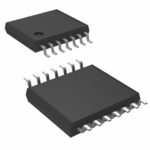 74HCT04PW,118

The activity of extra discounts on wholesale prices is in full swing…
Please fill in your contact information and we will send you the latest wholesale price list.





