 ChipApex | Global Electronic Components Supplier
SEARCH
Search Product
Search Post
— IC芯片 | 连接器 | 传感器 | 被动器件 —
Search productSearch post
— IC芯片 | 连接器 | 传感器 | 被动器件 —
Consult the customer manager about the wholesale price.
consultation hotline:86-132-6715-2157
email:[email protected]
Contact the product manager for consultation. One-stop consultation is available.
Do you want a lower wholesale price? Please send us your inquiry and we will reply immediately.
The 74HCT109PW,112 is a dual positive-edge-triggered JK flip-flop manufactured by Nexperia. It operates within a supply voltage range of 4.5 V to 5.5 V and features individual J and K inputs, clock (CP) inputs, and asynchronous active LOW set and reset inputs. The device provides complementary Q and nQ outputs and utilizes TTL input levels for compatibility with standard logic families. Packaged in TSSOP-16, it supports surface-mount installation and functions reliably across an extended temperature range from -40 °C to +125 °C.
Verify component authenticity through authorized Nexperia distributors or verified channels. Confirm package integrity and pin alignment against TSSOP-16 specifications. Ensure handling procedures comply with ESD protection standards during assembly. Cross-reference ordering part numbers to match specific suffix requirements. Validate compliance with relevant environmental directives prior to integration.
Select this component when dual positive-edge triggering is required alongside TTL input compatibility. The HCT series ensures seamless interface with existing 5 V logic infrastructure. Consider the extended temperature range for industrial environments. Evaluate the asynchronous set/reset functionality for immediate state control needs without clock dependency.
This device belongs to the 74HCT logic family, designed for high-speed CMOS operation with TTL-compatible inputs. It falls under the broader category of sequential logic integrated circuits. The product line emphasizes low power dissipation and high noise immunity, suitable for complex digital systems requiring reliable state retention and controlled data transitions.
Publicly confirmed substitute part numbers include 74HC109PW,112 for CMOS-level input variants and 74HCT109D,652 for alternative SOIC packaging options. Verify electrical parameter equivalence and pinout compatibility before substitution. Consult official Nexperia documentation for detailed cross-reference guidelines and functional differences between package types.
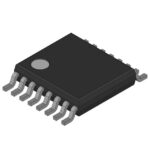 74HCT109PW,112
The activity of extra discounts on wholesale prices is in full swing…
Please fill in your contact information and we will send you the latest wholesale price list.





