 ChipApex | Global Electronic Components Supplier
SEARCH
Search Product
Search Post
— IC芯片 | 连接器 | 传感器 | 被动器件 —
Search productSearch post
— IC芯片 | 连接器 | 传感器 | 被动器件 —
Consult the customer manager about the wholesale price.
consultation hotline:86-132-6715-2157
email:[email protected]
Contact the product manager for consultation. One-stop consultation is available.
Do you want a lower wholesale price? Please send us your inquiry and we will reply immediately.
The 74HCT112PW,118 is a dual negative-edge triggered JK flip-flop with asynchronous set and reset inputs. Manufactured by Nexperia USA Inc., it belongs to the HCT logic series, ensuring TTL-compatible input levels while maintaining CMOS performance. The device operates within a supply voltage range of 4.5 V to 5.5 V and supports an extended industrial temperature range from -40 °C to +125 °C. It features individual J and K inputs, clock (nCP), set (nSD), and reset (nRD) controls, providing complementary nQ and Q outputs. Packaged in a 16-pin TSSOP format, it includes Schmitt-trigger action on the clock input for tolerance to slow rise times.
Verify the specific suffix 118 corresponds to the TSSOP-16 package configuration. Confirm RoHS compliance status through official Nexperia documentation prior to integration. Ensure design compatibility with the specified 4.5 V to 5.5 V supply voltage range. Check for any recent Product Change Notifications regarding marking or assembly updates. Validate ESD protection ratings against system requirements.
Select this component when dual JK functionality with asynchronous control is required in a compact surface-mount package. The HCT series selection is appropriate for systems interfacing with TTL-level logic sources. Consider the extended temperature range if operation in harsh environments is necessary. The Schmitt-trigger clock input makes it suitable for noisy environments or signals with slow edges compared to standard logic families.
This part is part of the widely adopted 74HCT logic family, designed for high-speed CMOS applications with TTL-compatible inputs. The 74HCT112 specifically addresses the need for dual flip-flops in space-constrained designs. It serves as a fundamental building block for complex digital systems, offering reliable state retention and control. The TSSOP packaging facilitates automated assembly and high-density PCB layouts.
Cross-reference with other 74HCT112 variants from different manufacturers for pin-compatible alternatives. Verify that substitute parts maintain identical asynchronous set/reset polarity and negative-edge triggering characteristics. Ensure replacement components support the same voltage and temperature specifications.
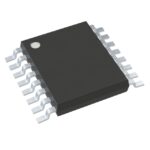 74HCT112PW,118
The activity of extra discounts on wholesale prices is in full swing…
Please fill in your contact information and we will send you the latest wholesale price list.





