 ChipApex | Global Electronic Components Supplier

SEARCH
Search Product
Search Post
— IC芯片 | 连接器 | 传感器 | 被动器件 —
Search productSearch post
— IC芯片 | 连接器 | 传感器 | 被动器件 —
Consult the customer manager about the wholesale price.
consultation hotline:86-132-6715-2157
email:[email protected]
Contact the product manager for consultation. One-stop consultation is available.
Do you want a lower wholesale price? Please send us your inquiry and we will reply immediately.
The Nexperia 74HCT132D-Q100,118 is a quad 2-input NAND gate with Schmitt-trigger inputs, designed for automotive applications. It operates within a supply voltage range of 4.5V to 5.5V and supports surface-mount installation in a 14-SOIC package (SOT108). The device features AEC-Q100 qualification, ensuring reliability under harsh conditions. Key electrical parameters include a maximum static current of 2 µA, output drive capabilities of 8mA high and low, and a maximum propagation delay of 15ns at 5V with 50pF load. It functions across an extended temperature range from -40°C to +125°C.
Verify the specific suffix 'Q100' confirms AEC-Q100 automotive qualification and HCT logic family compatibility. Ensure the 14-SOIC package matches your PCB footprint requirements. Confirm RoHS compliance status if required by your manufacturing standards. Check for any recent Product Change Notifications regarding assembly or labeling updates that may affect part marking or sourcing channels.
Select this component when automotive-grade reliability is required alongside TTL-compatible input levels. The HCT series ensures compatibility with standard TTL logic families, unlike the HC series which requires CMOS levels. Verify that the 4.5V to 5.5V supply range aligns with your system's power architecture. Consider the 14-SOIC package dimensions against available board space constraints.
This part belongs to the 74HCT132 family of quad 2-input NAND gates with Schmitt triggers. It is the automotive-qualified variant of the standard commercial 74HCT132. Manufactured by Nexperia, it shares functional similarities with other 74-series logic but is distinguished by its extended temperature range and automotive certification.
Direct substitutes include other AEC-Q100 qualified 74HCT132 variants from manufacturers like Texas Instruments or onsemi, provided they match the 14-SOIC package and electrical specifications. Ensure pinout compatibility and identical logic functionality before substitution.
The 74HCT132 uses TTL-compatible input levels, allowing direct interface with TTL logic, whereas the 74HC132 uses CMOS input levels. Both feature Schmitt triggers and similar electrical characteristics otherwise.
Yes, the inputs include clamp diodes, enabling the use of current-limiting resistors to interface inputs to voltages exceeding VCC safely.
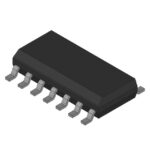 74HCT132D-Q100,118

The activity of extra discounts on wholesale prices is in full swing…
Please fill in your contact information and we will send you the latest wholesale price list.




