 ChipApex | Global Electronic Components Supplier
SEARCH
Search Product
Search Post
— IC芯片 | 连接器 | 传感器 | 被动器件 —
Search productSearch post
— IC芯片 | 连接器 | 传感器 | 被动器件 —
Consult the customer manager about the wholesale price.
consultation hotline:86-132-6715-2157
email:[email protected]
Contact the product manager for consultation. One-stop consultation is available.
Do you want a lower wholesale price? Please send us your inquiry and we will reply immediately.
The 74HCT175PW,112 is a quad D-type flip-flop manufactured by Nexperia USA Inc. It belongs to the HCT logic family, ensuring TTL-compatible input levels while operating with CMOS output drive capabilities. The device features four independent D inputs and corresponding Q outputs, along with complementary nQ outputs. It includes an asynchronous active-LOW master reset (MR) input that overrides clock and data signals. The component is designed for surface-mount applications in a 16-TSSOP package.
Verify the specific suffix '112' against current Nexperia documentation to confirm tape-and-reel packaging specifications. Confirm availability status as distribution channels may list obsolete or limited stock variants. Ensure the selected distributor provides valid RoHS compliance certificates matching the manufacturing date code. Cross-reference the ordering part number with the official datasheet to avoid confusion with similar HC or PW variants.
Select this component when TTL-level interface compatibility is required within a CMOS system architecture. The HCT series ensures reliable operation with standard 5V logic supplies while maintaining low power consumption. Consider the 16-TSSOP package for space-constrained PCB layouts requiring surface-mount technology. Verify that the asynchronous reset requirement aligns with the system's initialization sequence needs.
This part is a member of the Nexperia 74HCT logic family, which bridges the gap between older TTL standards and modern CMOS technologies. The 74HCT175 variant specifically provides quadruple flip-flop functionality, distinct from single or dual flip-flop counterparts like the 74HCT74. It is widely used in industrial and consumer electronics where robust noise immunity and standardized pinouts are essential for modular design.
Public confirmed substitute part numbers include 74HCT175D,652 and 74HCT175PW,118. These alternatives offer identical logical functionality and pinout compatibility. Verify package dimensions and electrical characteristics match the original design requirements before substitution.
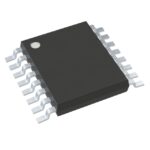 74HCT175PW,112
The activity of extra discounts on wholesale prices is in full swing…
Please fill in your contact information and we will send you the latest wholesale price list.





