 ChipApex | Global Electronic Components Supplier

SEARCH
Search Product
Search Post
— IC芯片 | 连接器 | 传感器 | 被动器件 —
Search productSearch post
— IC芯片 | 连接器 | 传感器 | 被动器件 —
Consult the customer manager about the wholesale price.
consultation hotline:86-132-6715-2157
email:[email protected]
Contact the product manager for consultation. One-stop consultation is available.
Do you want a lower wholesale price? Please send us your inquiry and we will reply immediately.
The Nexperia 74HCT2G00DP-Q100H is a dual 2-input NAND gate from the 74HCT series, designed for automotive applications. It operates within a supply voltage range of 4.5 V to 5.5 V and supports an ambient temperature range of -40 °C to +125 °C. The device utilizes TSSOP8 (SOT505-2) packaging with eight leads. It features TTL input switching levels, symmetrical output impedance, and high noise immunity. Static characteristics include low power dissipation and ESD protection exceeding 2000 V (HBM Class 2). Dynamic performance at 4.5 V includes a typical propagation delay of 12 ns and transition time of 6 ns.
Verify that the specific part number suffix matches the required package type and temperature grade. Confirm compliance with RoHS and REACH regulations as specified in the chemical content documentation. Ensure design safeguards are implemented to prevent operation beyond absolute maximum ratings, particularly regarding supply voltage and current limits. Cross-reference marking codes to validate authenticity upon receipt.
Select this component when TTL-level compatibility is required alongside automotive reliability standards. The HCT variant ensures direct interfacing with standard TTL logic families without additional level shifting. Consider the TSSOP8 package for space-constrained PCB layouts while maintaining thermal performance within the extended industrial temperature range.
This device belongs to the Nexperia 74HCT2G00-Q100 family of dual 2-input NAND gates. It shares functional similarities with the 74HC2G00-Q100 but differs in input voltage thresholds, adhering to TTL specifications rather than CMOS levels. Both variants share identical pinouts and packaging options, facilitating potential design swaps where voltage compatibility allows.
Direct substitutes include the 74HC2G00DP-Q100H, provided the application can accommodate CMOS input levels instead of TTL. Other compatible devices within the same automotive-grade logic family may be considered if pinout and electrical characteristics align with system requirements.
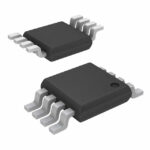 74HCT2G00DP-Q100H

The activity of extra discounts on wholesale prices is in full swing…
Please fill in your contact information and we will send you the latest wholesale price list.




