 ChipApex | Global Electronic Components Supplier
SEARCH
Search Product
Search Post
— IC芯片 | 连接器 | 传感器 | 被动器件 —
Search productSearch post
— IC芯片 | 连接器 | 传感器 | 被动器件 —
Consult the customer manager about the wholesale price.
consultation hotline:86-132-6715-2157
email:[email protected]
Contact the product manager for consultation. One-stop consultation is available.
Do you want a lower wholesale price? Please send us your inquiry and we will reply immediately.
The Nexperia 74HCT377D-Q100J is an automotive-grade octal D-type flip-flop with positive-edge triggering, certified to AEC-Q100 standards. It operates within a supply voltage range of 4.5V to 5.5V and features non-inverting outputs. The device supports clock frequencies up to 53 MHz and exhibits a maximum propagation delay of 32ns at 4.5V with 50pF load. It draws a static current of 8µA and provides output currents of 4mA (high) and 5.2mA (low). Designed for surface mount assembly, it is housed in a 20-SOIC package and functions reliably across an ambient temperature range of -40°C to +125°C.
Verify the specific suffix and manufacturer documentation to confirm AEC-Q100 certification status and exact package dimensions. Ensure compatibility with existing board layouts regarding the 20-SOIC footprint and thermal requirements. Cross-reference official datasheets for precise electrical characteristics under varying load conditions before finalizing procurement specifications.
Select this component when automotive reliability and wide temperature tolerance are required for octal data storage. Compare against standard commercial variants if AEC-Q100 certification is not mandatory. Consider the 20-SOIC package constraints and ensure the 4.5V to 5.5V supply range aligns with the system power architecture. Evaluate propagation delay limits against the target clock frequency requirements.
This part belongs to the 74HCT series of high-speed CMOS logic devices manufactured by Nexperia. The HCT technology ensures TTL-compatible input levels while maintaining CMOS performance benefits. The Q100 designation indicates adherence to automotive quality standards, distinguishing it from general-purpose industrial counterparts within the broader 74HCT family.
The 74HCT377PW-Q100J serves as a parameter-equivalent alternative offered by Nexperia. Verify pinout compatibility and package differences between SOIC and TSSOP formats during substitution planning.
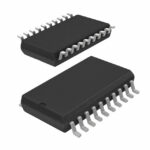 74HCT377D-Q100J
The activity of extra discounts on wholesale prices is in full swing…
Please fill in your contact information and we will send you the latest wholesale price list.






