 ChipApex | Global Electronic Components Supplier
SEARCH
Search Product
Search Post
— IC芯片 | 连接器 | 传感器 | 被动器件 —
Search productSearch post
— IC芯片 | 连接器 | 传感器 | 被动器件 —
Consult the customer manager about the wholesale price.
consultation hotline:86-132-6715-2157
email:[email protected]
Contact the product manager for consultation. One-stop consultation is available.
Do you want a lower wholesale price? Please send us your inquiry and we will reply immediately.
The Nexperia 74HCT574D,653 is an octal D-type flip-flop with three-state outputs, part of the HCT logic family. It operates on a single supply voltage ranging from 4.5V to 5.5V. The device features a positive-edge clock trigger and includes a master reset input. It is housed in a 20-SOIC surface-mount package with a width of 7.50mm. Key electrical parameters include a maximum propagation delay of 15ns, quiescent current of 8µA, and output drive capabilities of ±6mA at high and low levels.
Verify the specific suffix '653' corresponds to tape-and-reel packaging when ordering. Confirm that the operating environment remains within the specified 4.5V to 5.5V supply range to ensure logical compatibility with standard TTL levels. Check for RoHS compliance status if environmental regulations apply to the final assembly. Ensure proper handling procedures are followed due to the surface-mount nature of the 20-SOIC package during manufacturing integration.
Select this component when an octal storage element with three-state outputs is required for 5V logic systems. The HCT series ensures compatibility with standard TTL inputs while offering CMOS power efficiency. Consider the 15ns propagation delay for timing constraints in the target application. Verify that the 20-pin SOIC footprint fits the available PCB space and thermal requirements compared to alternative packages like TSSOP or SOIC-N.
This component belongs to the widely adopted 74HCT logic family, designed for high-speed operation with TTL-compatible input thresholds. The 74HCT574 variant specifically addresses applications needing parallel data latching with controlled output impedance. It serves as a fundamental building block for sequential logic design, enabling efficient data management in embedded controllers and communication interfaces without external gating components.
It belongs to the HCT (High-speed CMOS Technology) family, which provides TTL-compatible input levels with CMOS output characteristics.
The device contains eight independent D-type flip-flops, making it an octal storage element.
Data is captured on the positive edge of the clock signal, meaning the output updates based on the input state at the rising transition.
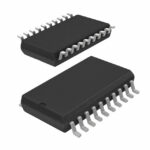 74HCT574D,653
The activity of extra discounts on wholesale prices is in full swing…
Please fill in your contact information and we will send you the latest wholesale price list.






