 ChipApex | Global Electronic Components Supplier
SEARCH
Search Product
Search Post
— IC芯片 | 连接器 | 传感器 | 被动器件 —
Search productSearch post
— IC芯片 | 连接器 | 传感器 | 被动器件 —
Consult the customer manager about the wholesale price.
consultation hotline:86-132-6715-2157
email:[email protected]
Contact the product manager for consultation. One-stop consultation is available.
Do you want a lower wholesale price? Please send us your inquiry and we will reply immediately.
The NXP USA Inc. 74HCT574PW/AUJ is an octal D-type flip-flop featuring positive edge triggering and three-state outputs, housed in a TSSOP-20 package. It operates within a supply voltage range of 4.5 V to 5.5 V. The device provides non-inverting data paths with an output enable input that controls the high-impedance state without affecting internal logic. It supports a wide operating temperature range from -40 °C to +125 °C, ensuring reliability in demanding environments.
Verify the specific suffix AUJ against official NXP documentation to confirm tape-and-reel packaging configuration and moisture sensitivity level. Ensure the component meets RoHS compliance requirements for your target market. Cross-reference the manufacturer part number with authorized distributor catalogs to confirm current availability status and lead times prior to finalizing procurement plans.
Select this component when designing systems requiring eight-bit parallel data storage with bus-compatible tri-state outputs. The HCT logic family ensures TTL compatibility while maintaining CMOS power efficiency. Consider the TSSOP-20 package for surface-mount assembly constraints and verify that the 4.5 V to 5.5 V supply range aligns with the system's power distribution network.
This component belongs to the 74HCT574 series of octal D-type flip-flops manufactured by NXP Semiconductors. The series is designed for high-speed digital applications requiring reliable data latching. The PW variant indicates a plastic TSSOP package, while the AUJ suffix typically denotes specific reel packaging or regional distribution specifications defined by the manufacturer.
SN74HCT574PWR (Texas Instruments)
When the output enable input is set to a high logic level, the outputs enter a high-impedance state. This action isolates the outputs from the bus but does not interrupt the internal clocking or data latching processes.
The device utilizes a positive edge-triggered mechanism, meaning data is captured at the inputs and transferred to the outputs on the rising edge of the clock signal.
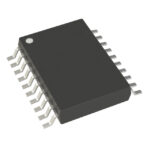 74HCT574PW/AUJ
The activity of extra discounts on wholesale prices is in full swing…
Please fill in your contact information and we will send you the latest wholesale price list.






