 ChipApex | Global Electronic Components Supplier
SEARCH
Search Product
Search Post
— IC芯片 | 连接器 | 传感器 | 被动器件 —
Search productSearch post
— IC芯片 | 连接器 | 传感器 | 被动器件 —
Consult the customer manager about the wholesale price.
consultation hotline:86-132-6715-2157
email:[email protected]
Contact the product manager for consultation. One-stop consultation is available.
Do you want a lower wholesale price? Please send us your inquiry and we will reply immediately.
The 74LV174DB,112 is a hex D-type flip-flop manufactured by NXP USA Inc., housed in a 16-SSOP package. It features six independent positive-edge-triggered D-type flip-flops with separate clock inputs and no reset functionality. The device operates within a supply voltage range of 1V to 5.5V, ensuring compatibility with low-voltage systems. Key electrical parameters include a propagation delay of 16 ns at 3.3V and output drive capabilities of 12mA for both high and low states. Quiescent current is specified at 160µA, with an input capacitance of 3.5pF.
Verify the specific ordering code 74LV174DB,112 against manufacturer documentation to confirm the SSOP package variant. Ensure compliance with RoHS and REACH directives as indicated for this component. Cross-reference the part number with official NXP datasheets to validate pinout and electrical characteristics before integration into final designs.
Select this component when a hex D-type flip-flop with positive-edge triggering is required for low-voltage applications. The wide supply voltage range accommodates systems operating between 1V and 5.5V. Consider the 16-SSOP package for surface-mount assembly needs. Verify that the absence of a reset function aligns with the design requirements for the intended digital logic application.
This component belongs to the 74LV series of low-voltage CMOS logic devices produced by NXP. The 74LV family is designed for operation in the 1.2V to 5.5V range, offering performance comparable to standard 74HC logic but with lower power consumption. The 74LV174 specifically provides hex D-type flip-flops, distinguishing it from other series members like the 74LV74 which offers dual D-type flip-flops with preset and clear functions.
The 74LV174PW112 serves as a functional substitute, offering identical logical operations in a TSSOP package. Both parts share the same hex D-type flip-flop architecture and electrical specifications. Designers should verify mechanical footprint compatibility when switching between the SSOP and TSSOP variants to ensure proper board layout integration.
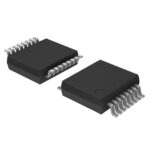 74LV174DB,112
The activity of extra discounts on wholesale prices is in full swing…
Please fill in your contact information and we will send you the latest wholesale price list.





