 ChipApex | Global Electronic Components Supplier
SEARCH
Search Product
Search Post
— IC芯片 | 连接器 | 传感器 | 被动器件 —
Search productSearch post
— IC芯片 | 连接器 | 传感器 | 被动器件 —
Consult the customer manager about the wholesale price.
consultation hotline:86-132-6715-2157
email:[email protected]
Contact the product manager for consultation. One-stop consultation is available.
Do you want a lower wholesale price? Please send us your inquiry and we will reply immediately.
The NXP USA Inc. 74LV273PW,112 is an octal D-type flip-flop with reset, belonging to the 74LV logic series. It features a single circuit containing eight bits and utilizes positive-edge triggering for data capture. The device operates within a supply voltage range of 1V to 5.5V and supports surface-mount installation in a 20-TSSOP package measuring 4.40mm wide. It provides non-inverting outputs with a maximum propagation delay of 17ns at 5V with 50pF load, ensuring reliable digital signal storage in low-voltage applications.
Verify component authenticity through official manufacturer channels or authorized distributors. Confirm that the received part matches the exact 74LV273PW,112 designation and packaging specifications. Ensure compliance with RoHS directives as indicated in technical documentation. Cross-reference datasheet revisions to confirm current manufacturing status and availability constraints before finalizing procurement plans.
Select this component when designing systems requiring an octal register with explicit reset control under varying supply voltages. The 74LV series compatibility ensures interoperability with other low-voltage logic families. Consider the 20-TSSOP footprint for PCB layout constraints. Validate that the 17ns propagation delay meets timing requirements for the specific application speed.
This component belongs to the broader 74LV family of low-voltage CMOS logic devices manufactured by NXP. It shares functional similarities with other octal flip-flops like the 74LV574 but differs in pinout and specific electrical characteristics. The 74LV273 variant specifically emphasizes the reset feature for controlled initialization states in complex digital architectures.
Public confirmed substitute part numbers include MC74LVX574DTR2G from onsemi and SN74LV574ADBR from Texas Instruments. Verify pin compatibility and electrical parameter alignment before substitution.
The reset pin forces all outputs to a low state regardless of input or clock signals, preventing undefined states until the system controller initializes.
The device uses positive-edge triggering, capturing data from the D inputs on the rising edge of the clock signal.
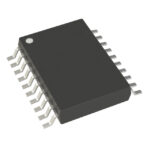 74LV273PW,112
The activity of extra discounts on wholesale prices is in full swing…
Please fill in your contact information and we will send you the latest wholesale price list.





