 ChipApex | Global Electronic Components Supplier
SEARCH
Search Product
Search Post
— IC芯片 | 连接器 | 传感器 | 被动器件 —
Search productSearch post
— IC芯片 | 连接器 | 传感器 | 被动器件 —
Consult the customer manager about the wholesale price.
consultation hotline:86-132-6715-2157
email:[email protected]
Contact the product manager for consultation. One-stop consultation is available.
Do you want a lower wholesale price? Please send us your inquiry and we will reply immediately.
The NXP USA Inc. 74LV374D,118 is an octal D-type flip-flop with 3-state outputs from the 74LV series. It operates on a single supply voltage ranging from 1V to 5.5V. The device features positive-edge triggering and non-inverting logic. It is housed in a 20-SOIC package (SOT163) and supports surface-mount installation. The component is designed for industrial temperature ranges, typically spanning -40°C to +125°C.
Verify the specific manufacturer designation, as NXP Semiconductors and NXP USA Inc. may represent different corporate entities or distribution channels for the same base part number. Confirm that the 'D' suffix corresponds to the SOIC-20 package variant rather than TSSOP or other packages. Ensure compliance with RoHS directives if required by your manufacturing standards. Cross-reference the full ordering code against official NXP documentation to confirm availability status and any recent product change notices affecting this specific revision.
Select this component when designing systems requiring low-voltage operation down to 1V combined with high-speed performance typical of the LV series. The 3-state outputs are essential for bus-oriented architectures where multiple devices share common data lines. Consider the 20-SOIC package dimensions for PCB layout constraints. Verify that the operating temperature range meets the environmental requirements of the target application, particularly if exposure to extreme cold or heat is anticipated during operation.
This component belongs to the 74LV family of logic ICs, characterized by low voltage operation and CMOS technology. It serves as a fundamental building block for sequential logic circuits, offering reliable data retention and transfer capabilities. The 74LV series is widely used in consumer electronics, telecommunications, and industrial control systems where power efficiency and speed are critical design parameters.
SN74LV374ADBR
The device uses positive-edge triggering, meaning data is captured at the rising edge of the clock signal.
No, the outputs are non-inverting, matching the state of the D inputs when enabled.
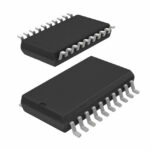 74LV374D,118
The activity of extra discounts on wholesale prices is in full swing…
Please fill in your contact information and we will send you the latest wholesale price list.






