 ChipApex | Global Electronic Components Supplier
SEARCH
Search Product
Search Post
— IC芯片 | 连接器 | 传感器 | 被动器件 —
Search productSearch post
— IC芯片 | 连接器 | 传感器 | 被动器件 —
Consult the customer manager about the wholesale price.
consultation hotline:86-132-6715-2157
email:[email protected]
Contact the product manager for consultation. One-stop consultation is available.
Do you want a lower wholesale price? Please send us your inquiry and we will reply immediately.
The Nexperia 74LVC1G123DP,125 is a single retriggerable monostable multivibrator with Schmitt trigger inputs, housed in an 8-lead TSSOP package (SOT505-2). It operates within a supply voltage range of 1.65 V to 5.5 V and supports an output drive current of ±24 mA at 3.0 V. The device features low power consumption, with a maximum quiescent current of 20 μA across the operating temperature range of -40 °C to +125 °C. Propagation delay from input A or B to output Q ranges from 1.2 ns to 17.6 ns depending on load capacitance and voltage.
Verify the specific ordering suffix '125' against the manufacturer's official documentation to confirm packaging details such as tape and reel specifications. Ensure that the selected component meets the required ambient temperature range and voltage levels for the intended application environment before finalizing procurement.
Select this component when a single-channel monostable multivibrator with retriggering capability is required. Consider the 74LVC logic family for compatibility with mixed 3.3 V and 5 V environments. Evaluate the external resistor and capacitor requirements for desired pulse widths and ensure the TSSOP package fits the available PCB space constraints.
This part belongs to the 74LVC1G123 series of single retriggerable monostable multivibrators. The DP suffix indicates the TSSOP8 plastic thin shrink small outline package variant. Other package options include VSSOP8, XSON8, and XSON8U, offering flexibility for different board layout densities and thermal requirements.
Direct replacements include other 74LVC1G123 variants with different packages, such as 74LVC1G123DC (VSSOP8) or 74LVC1G123GT (XSON8), provided the pinout and electrical characteristics remain compatible with the existing design.
The output pulse width is programmed by selecting an external resistor (REXT) and capacitor (CEXT). It can also be extended by retriggering the gated active LOW-going edge input (A) or the active HIGH-going edge input (B).
Yes, an internal connection from CLR to the input gates makes it possible to trigger the circuit by a HIGH-going signal at input CLR, in addition to its function as a direct reset input.
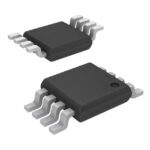 74LVC1G123DP,125
The activity of extra discounts on wholesale prices is in full swing…
Please fill in your contact information and we will send you the latest wholesale price list.







