 ChipApex | Global Electronic Components Supplier
SEARCH
Search Product
Search Post
— IC芯片 | 连接器 | 传感器 | 被动器件 —
Search productSearch post
— IC芯片 | 连接器 | 传感器 | 被动器件 —
Consult the customer manager about the wholesale price.
consultation hotline:86-132-6715-2157
email:[email protected]
Contact the product manager for consultation. One-stop consultation is available.
Do you want a lower wholesale price? Please send us your inquiry and we will reply immediately.
The SN74LVC1G175DBVRG4 is a single D-type flip-flop from Texas Instruments' LVC logic series, housed in a SOT-23-6 surface-mount package. It operates on a supply voltage range of 1.65 V to 5.5 V and supports CMOS and TTL input types with non-inverting polarity. The device features a propagation delay of 3 ns at 3.3 V and 3.2 ns at 5 V, with maximum high-level output current of -32 mA and low-level output current of 32 mA. It functions at clock frequencies up to 175 MHz and operates within a temperature range of -40 °C to 85 °C.
Verify the specific suffix 'RG4' against the manufacturer's official ordering information to confirm RoHS compliance status and environmental declarations. Ensure the SOT-23-6 package dimensions match the target PCB footprint requirements. Cross-reference the datasheet revision date to confirm that electrical characteristics and pinout configurations remain consistent with the design specifications.
Select this component when a compact single-bit storage element is required within space-constrained designs utilizing the LVC logic family. The SOT-23-6 package offers a small form factor suitable for dense layouts. Consider the 1.65 V minimum supply voltage if interfacing with low-power subsystems, while noting the 32 mA output drive strength allows for direct connection to moderate capacitive loads without additional buffering.
This part belongs to the SN74LVC1Gxx series of single-gate logic devices manufactured by Texas Instruments. These components are designed for portable and battery-operated applications due to their wide voltage range and low power consumption characteristics. The LVC series provides compatibility with standard logic levels while offering improved speed over older families, making it suitable for modern high-density digital circuitry.
The SN74LVC1G175DBVR is a compatible alternative from the same manufacturer featuring identical logical functionality and pinout. Verify that the replacement part number matches the required package type and operational temperature range before substitution.
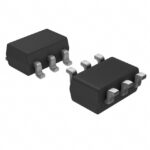 74LVC1G175DBVRG4
The activity of extra discounts on wholesale prices is in full swing…
Please fill in your contact information and we will send you the latest wholesale price list.






