ChipApex | Global Electronic Components Supplier
SEARCH
Search Product
Search Post
— IC芯片 | 连接器 | 传感器 | 被动器件 —
Search productSearch post
— IC芯片 | 连接器 | 传感器 | 被动器件 —
Consult the customer manager about the wholesale price.
consultation hotline:86-132-6715-2157
email:[email protected]
Contact the product manager for consultation. One-stop consultation is available.
Do you want a lower wholesale price? Please send us your inquiry and we will reply immediately.
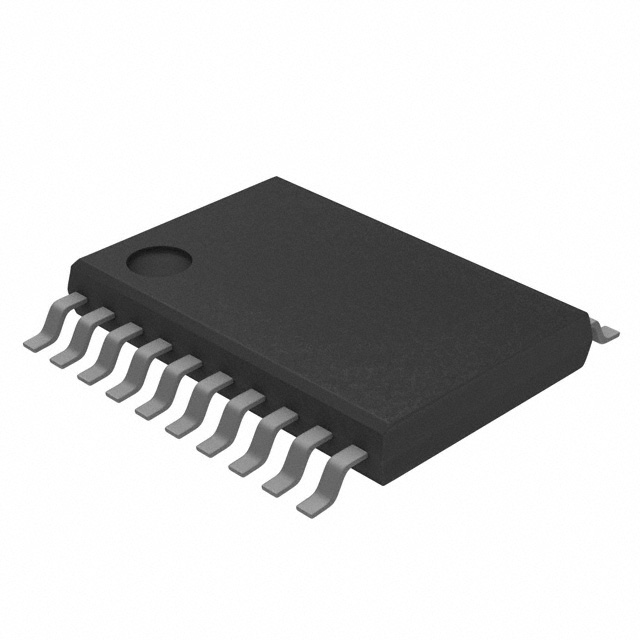
The 74LVC273AT20-13 is an octal D-type flip-flop manufactured by Diodes Incorporated, featuring a positive-edge trigger mechanism and an asynchronous clear input. It operates within a supply voltage range of 1.65 V to 3.6 V, utilizing CMOS logic technology from the LVC series. The device provides push-pull outputs with high drive capability, delivering 24 mA for both high and low states. Packaged in a TSSOP-20 surface-mount format, it exhibits a propagation delay of 4.1 ns at 3.3 V. The component supports industrial temperature operations from -40°C to +125°C.
Verify the specific suffix AT20-13 to confirm the TSSOP-20 package variant and manufacturer lot coding. Ensure compatibility with standard surface-mount reflow soldering profiles. Confirm RoHS compliance status through official documentation before integration into regulated assemblies. Cross-reference ordering codes with distributor catalogs to avoid packaging discrepancies.
Select this component when an octal register with asynchronous clear functionality is required in a compact surface-mount footprint. The LVC series ensures voltage level translation between different logic domains. Consider the 24 mA output drive strength for driving moderate capacitive loads directly. Verify thermal requirements against the specified operating temperature range for the target environment.
This part belongs to the 74LVC273 family of octal D-type flip-flops produced by Diodes Incorporated. The family offers various package options including QFN and SOIC variants. The AT20-13 designation specifically identifies the TSSOP-20 package version. This series is designed for low-voltage applications requiring high-speed performance and robust noise immunity.
The 74LVC273AQ20-13 serves as a package-compatible alternative within the same product line, offering identical electrical characteristics but housed in a QFN-20 package instead of TSSOP-20. Both parts share the same logical function and pinout compatibility where applicable. Verify mechanical fitment constraints before substituting between these package types.
 74LVC273AT20-13
The activity of extra discounts on wholesale prices is in full swing…
Please fill in your contact information and we will send you the latest wholesale price list.