 ChipApex | Global Electronic Components Supplier
SEARCH
Search Product
Search Post
— IC芯片 | 连接器 | 传感器 | 被动器件 —
Search productSearch post
— IC芯片 | 连接器 | 传感器 | 被动器件 —
Consult the customer manager about the wholesale price.
consultation hotline:86-132-6715-2157
email:[email protected]
Contact the product manager for consultation. One-stop consultation is available.
Do you want a lower wholesale price? Please send us your inquiry and we will reply immediately.
The Nexperia 74LVC273D,118 is a D-type edge-triggered flip-flop in the LVC logic series. It contains one circuit with eight bits per element, housed in a 20-SOIC package. The device operates on a supply voltage range of 1.65 V to 3.6 V. It features non-inverting outputs and single-ended inputs. Key electrical parameters include a maximum propagation delay of 8.2 ns at 3.3 V with 50 pF load, and output drive currents of ±24 mA. Static current consumption is 10 µA, with an input capacitance of 5 pF. The component supports surface mount installation and functions within a temperature range of -40 °C to +125 °C.
Verify the specific ordering code suffix against the manufacturer's official documentation to ensure correct packaging and variant selection. Confirm that the 20-SOIC package dimensions match the target PCB footprint requirements. Check RoHS compliance status and lead times through authorized distribution channels prior to finalizing procurement plans.
Select this component when an 8-bit parallel storage solution is required within the 1.65 V to 3.6 V operating range. Ensure the design accommodates the 20-pin SOIC package constraints. Verify that the clock frequency requirements do not exceed the specified limits for the chosen supply voltage and load conditions.
This part belongs to the 74LVC family of high-speed CMOS logic devices manufactured by Nexperia. It serves as a fundamental building block for sequential logic circuits. The device provides reliable data retention and transfer capabilities for modern low-voltage digital applications requiring robust performance.
Consult official Nexperia substitution guides for compatible alternatives. Verify pinout compatibility and electrical specifications before replacing with other manufacturers' equivalents.
The device uses positive-edge triggering, transferring data from the D input to the Q output on the LOW-to-HIGH transition of the clock pulse.
No, the standard 74LVC273 does not include asynchronous set or reset inputs; it relies on the master reset function for initialization.
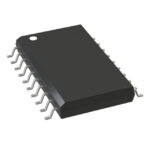 74LVC273D,118
The activity of extra discounts on wholesale prices is in full swing…
Please fill in your contact information and we will send you the latest wholesale price list.





