 ChipApex | Global Electronic Components Supplier
SEARCH
Search Product
Search Post
— IC芯片 | 连接器 | 传感器 | 被动器件 —
Search productSearch post
— IC芯片 | 连接器 | 传感器 | 被动器件 —
Consult the customer manager about the wholesale price.
consultation hotline:86-132-6715-2157
email:[email protected]
Contact the product manager for consultation. One-stop consultation is available.
Do you want a lower wholesale price? Please send us your inquiry and we will reply immediately.
The 74LVC74APW,118 is a dual D-type flip-flop with set and reset functions, manufactured by Nexperia USA Inc. It operates within a supply voltage range of 1.2 V to 3.6 V and features Schmitt trigger inputs for noise immunity. The device provides complementary outputs and supports asynchronous active-low set and reset signals independent of the clock. It is housed in a 14-pin TSSOP package (SOT402) and complies with JEDEC standards for various voltage levels. The component is specified for industrial temperature ranges up to +125 °C.
Verify the complete part number including the suffix ,118 to ensure correct packaging configuration. Confirm that the TSSOP-14 package variant matches your PCB footprint requirements. Check RoHS compliance status against current regulatory standards for your target market. Ensure ESD handling procedures are followed during assembly due to CMOS sensitivity. Validate operating temperature specifications against your environmental constraints.
Select this component when dual independent D-flip-flops are required in a single package. The Schmitt trigger inputs make it suitable for noisy environments or signals with slow transition times. Its wide supply voltage range allows flexibility in low-power designs. Consider the 14-pin TSSOP form factor for space-constrained surface-mount applications requiring robust logic storage capabilities.
This part belongs to the 74LVC series of high-speed CMOS logic devices from Nexperia. The LVC family is designed for low-voltage operation while maintaining compatibility with higher voltage interfaces. The 74LVC74A specifically provides dual flip-flop functionality, distinguishing it from single flip-flop variants like the 74LVC174. It is part of Nexperia's extensive portfolio of standard logic ICs aimed at simplifying design processes across consumer and industrial electronics.
The set and reset inputs are asynchronous and active-low. They operate independently of the clock input, allowing immediate setting or resetting of the flip-flop state regardless of clock activity.
Schmitt trigger action at all inputs makes the circuit highly tolerant of slower input rise and fall times, ensuring reliable operation even with noisy or slowly changing signal edges.
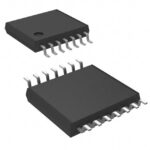 74LVC74APW,118
The activity of extra discounts on wholesale prices is in full swing…
Please fill in your contact information and we will send you the latest wholesale price list.





