 ChipApex | Global Electronic Components Supplier
SEARCH
Search Product
Search Post
— IC芯片 | 连接器 | 传感器 | 被动器件 —
Search productSearch post
— IC芯片 | 连接器 | 传感器 | 被动器件 —
Consult the customer manager about the wholesale price.
consultation hotline:86-132-6715-2157
email:[email protected]
Contact the product manager for consultation. One-stop consultation is available.
Do you want a lower wholesale price? Please send us your inquiry and we will reply immediately.
The STMicroelectronics 74LVQ574MTR is an octal D-type transparent latch featuring three-state outputs, housed in a 20-SOIC surface-mount package. It operates within a supply voltage range of 2V to 3.6V and supports a wide operating temperature range from -55°C to +125°C. The component belongs to the 74LVQ logic series and is designed for SMT installation. It is currently classified as obsolete or not recommended for new designs.
This component is officially listed as obsolete by the manufacturer. Procurement requires verification of remaining stock availability through authorized distributors or surplus suppliers. Buyers must confirm that the specific lot meets RoHS requirements and assess the long-term viability of using end-of-life components for production. Alternative sourcing strategies should be evaluated to ensure supply chain continuity for existing maintenance or replacement needs.
Engineers selecting this part should consider its low-voltage operation between 2V and 3.6V, which distinguishes it from standard 5V logic families. The 20-SOIC package offers a compact footprint for surface-mount assembly. Due to its obsolete status, design-in decisions should prioritize available replacements or verify if the component is still permitted for use in current manufacturing processes without violating supply constraints.
The 74LVQ574MTR is part of STMicroelectronics' 74LVQ series, which focuses on low-voltage CMOS technology. This series provides performance benefits over older generations while maintaining compatibility with standard digital logic interfaces. The MTR suffix indicates the tape-and-reel packaging format intended for automated surface-mount placement equipment.
Direct substitutes include SN74AC374DWR (Texas Instruments) and MC74AC574DWG (onsemi). These alternatives offer similar octal D-type latch functionality but may differ in electrical specifications such as supply voltage ranges and switching speeds. Verification of pinout compatibility and logical function equivalence is required before substitution.
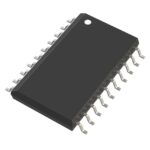 74LVQ574MTR
The activity of extra discounts on wholesale prices is in full swing…
Please fill in your contact information and we will send you the latest wholesale price list.





