 ChipApex | Global Electronic Components Supplier
SEARCH
Search Product
Search Post
— IC芯片 | 连接器 | 传感器 | 被动器件 —
Search productSearch post
— IC芯片 | 连接器 | 传感器 | 被动器件 —
Consult the customer manager about the wholesale price.
consultation hotline:86-132-6715-2157
email:[email protected]
Contact the product manager for consultation. One-stop consultation is available.
Do you want a lower wholesale price? Please send us your inquiry and we will reply immediately.
The Fairchild Semiconductor 74LVQ74SC is a low-voltage dual D-type positive edge-triggered flip-flop featuring asynchronous clear and set inputs with complementary outputs. It operates within a voltage range of 2V to 5.5V, supporting logic levels across standard interfaces. The device is housed in a 16-pin SOIC package, designed for surface-mount applications. It ensures reliable data storage and transfer in digital systems, maintaining signal integrity under varying supply conditions while adhering to strict timing specifications for synchronous operations.
Verify component authenticity through authorized distributors or manufacturer channels. Confirm RoHS compliance status and check for obsolescence notices, as legacy parts may have limited availability. Ensure packaging matches specified SOIC-16 requirements. Review datasheet revisions for any updates to electrical characteristics or pin assignments before integration into production designs.
Select this component for applications requiring dual flip-flops with asynchronous control in low-voltage environments. Consider the 16-pin SOIC package for space-constrained PCB layouts. Evaluate timing parameters against system clock speeds to ensure setup and hold time compliance. Compare power consumption metrics with alternative logic families if energy efficiency is critical for the target application.
Part of the 74LVQ series, which provides low-voltage CMOS performance with TTL-compatible inputs. This series bridges older logic standards with modern low-power requirements. The SC suffix indicates a specific tape-and-reel or tube packaging variant suitable for automated assembly processes, ensuring consistent handling during high-volume manufacturing operations.
Direct substitutes include MC74LVQ74D from onsemi or SN74LVQ74PW from Texas Instruments. Verify pin compatibility and electrical specifications match exactly. Check for equivalent asynchronous control features and output drive capabilities. Confirm package dimensions align with existing footprints to avoid rework during replacement.
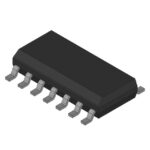 74LVQ74SC
The activity of extra discounts on wholesale prices is in full swing…
Please fill in your contact information and we will send you the latest wholesale price list.






