 ChipApex | Global Electronic Components Supplier
SEARCH
Search Product
Search Post
— IC芯片 | 连接器 | 传感器 | 被动器件 —
Search productSearch post
— IC芯片 | 连接器 | 传感器 | 被动器件 —
Consult the customer manager about the wholesale price.
consultation hotline:86-132-6715-2157
email:[email protected]
Contact the product manager for consultation. One-stop consultation is available.
Do you want a lower wholesale price? Please send us your inquiry and we will reply immediately.
The Fairchild Semiconductor 74LVTH574MTC is an octal D-type flip-flop belonging to the LVTH logic series. It features eight non-inverting positive-edge-triggered D-type flip-flops with 3-state outputs in a 20-TSSOP package. The device operates within a supply voltage range of 2.7 V to 3.6 V and supports data rates up to 150 MHz. Key electrical characteristics include a maximum propagation delay of 5.3 ns, high-level output current of -32 mA, and low-level output current of 64 mA. It functions within an industrial temperature range of -40°C to +85°C.
Verify component authenticity through official manufacturer channels or authorized distributors due to potential availability constraints. Confirm RoHS compliance status and specific packaging requirements prior to ordering. Review datasheet specifications carefully to ensure compatibility with target voltage levels and timing constraints. Validate that the 20-TSSOP package dimensions align with existing PCB footprint designs.
Select this component when designing systems requiring octal data storage with high-speed performance at 3.3 V logic levels. Consider the 5.3 ns propagation delay and 150 MHz clock frequency limits for timing analysis. Ensure the 3-state output capability matches the bus architecture requirements. Evaluate thermal management needs given the operating temperature range and surface mount packaging constraints.
This part belongs to the 74LVTH family of low-voltage CMOS logic devices manufactured by Fairchild Semiconductor. The LVTH series combines advanced CMOS technology with TTL-compatible input thresholds, facilitating interface between different logic families. As an octal flip-flop, it serves as a fundamental building block for sequential logic circuits in consumer electronics and industrial control applications.
Direct substitutes include SN74LVTH574PWR and SN74LVTH574DW from Texas Instruments. These alternatives offer similar functional specifications and pinout configurations. Verify electrical parameter alignment and package compatibility before implementation.
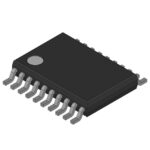 74LVTH574MTC
The activity of extra discounts on wholesale prices is in full swing…
Please fill in your contact information and we will send you the latest wholesale price list.





