 ChipApex | Global Electronic Components Supplier
SEARCH
Search Product
Search Post
— IC芯片 | 连接器 | 传感器 | 被动器件 —
Search productSearch post
— IC芯片 | 连接器 | 传感器 | 被动器件 —
Consult the customer manager about the wholesale price.
consultation hotline:86-132-6715-2157
email:[email protected]
Contact the product manager for consultation. One-stop consultation is available.
Do you want a lower wholesale price? Please send us your inquiry and we will reply immediately.
The 74LVX273MX is an octal D-type flip-flop with a positive-edge trigger and three-state outputs, manufactured by Fairchild Semiconductor. It operates within a supply voltage range of 2.0 V to 3.6 V and features low static power consumption. The device utilizes a 20-pin SOIC package and supports a maximum operating frequency of 50 MHz at nominal supply voltages. Key electrical parameters include a propagation delay of 18 ns at 2.7 V and 12.8 ns at 3.3 V, with output drive capabilities of ±4 mA. It is designed for surface-mount applications across industrial temperature ranges.
Verify the manufacturer designation carefully, as onsemi acquired Fairchild's semiconductor business. Ensure the part number suffix matches the required package type (SOIC-20) and tape/reel specifications for automated assembly. Confirm RoHS compliance status and moisture sensitivity level requirements prior to procurement to align with IPC/JEDEC standards for surface-mount reflow processes.
Select this component when designing systems requiring octal storage with high-speed performance under low voltage conditions. The LVX series offers superior speed compared to standard LV or LVC families while maintaining compatibility with 3.3 V logic levels. Consider the specific propagation delay variations based on supply voltage and load capacitance when determining signal integrity margins for high-frequency applications.
This component belongs to the 74LVX family of high-speed CMOS logic devices, representing the evolution of Fairchild's low-voltage logic portfolio. The LVX series bridges the performance gap between legacy 5 V TTL-compatible logic and modern low-voltage standards. As an octal flip-flop, it serves as a fundamental building block for complex digital state machines and data path management in embedded systems.
Public confirmed substitute part numbers include 74LVX273MTCX (TSSOP-20 variant) and 74LVX273MX_NL. Verify pinout compatibility and package dimensions when substituting between SOIC and TSSOP formats. Cross-reference with onsemi datasheets to ensure identical electrical characteristics and functional behavior.
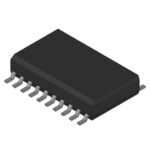 74LVX273MX
The activity of extra discounts on wholesale prices is in full swing…
Please fill in your contact information and we will send you the latest wholesale price list.





