 ChipApex | Global Electronic Components Supplier
SEARCH
Search Product
Search Post
— IC芯片 | 连接器 | 传感器 | 被动器件 —
Search productSearch post
— IC芯片 | 连接器 | 传感器 | 被动器件 —
Consult the customer manager about the wholesale price.
consultation hotline:86-132-6715-2157
email:[email protected]
Contact the product manager for consultation. One-stop consultation is available.
Do you want a lower wholesale price? Please send us your inquiry and we will reply immediately.
The 74LVX574TTR is an octal D-type flip-flop manufactured by STMicroelectronics, featuring three-state outputs and non-inverting logic. It operates within a supply voltage range of 2 V to 3.6 V and utilizes low-voltage CMOS technology for reduced power consumption. The component is housed in a 20-TSSOP surface-mount package with a 0.173-inch width. It supports serial-to-parallel data conversion and includes clocked edge-triggering functionality. The device is designed for high noise immunity and symmetrical output impedance, suitable for digital signal processing applications requiring reliable data storage.
Verify the specific manufacturer part number against official STMicroelectronics documentation to ensure authenticity. Confirm that the component meets RoHS compliance standards required for your region. Check for any obsolescence notices or end-of-life status directly from the manufacturer before finalizing procurement plans. Ensure the TSSOP-20 package dimensions match your PCB footprint requirements precisely.
Select this component when designing low-voltage digital circuits requiring octal data storage capabilities. Consider its 2 V to 3.6 V operating range for compatibility with modern low-power systems. Evaluate the 20-TSSOP package size against available board space constraints. Compare performance metrics such as propagation delay and output drive strength against alternative logic families if higher speed or different voltage levels are needed.
This component belongs to the 74LVX series of low-voltage CMOS logic devices produced by STMicroelectronics. The series is characterized by high-speed operation and low power dissipation, making it suitable for portable and battery-operated applications. The 74LVX574 specifically provides octal D-type flip-flop functionality, distinguishing it from single-bit or smaller capacity variants within the same logical family.
Direct substitutes may include equivalent octal D-type flip-flops from other manufacturers offering compatible pinouts and electrical specifications. Verify voltage ranges and package types carefully when considering alternatives. Cross-reference datasheets to ensure functional parity regarding output states and triggering mechanisms.
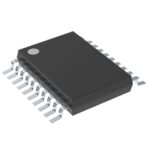 74LVX574TTR
The activity of extra discounts on wholesale prices is in full swing…
Please fill in your contact information and we will send you the latest wholesale price list.





