 ChipApex | Global Electronic Components Supplier
SEARCH
Search Product
Search Post
— IC芯片 | 连接器 | 传感器 | 被动器件 —
Search productSearch post
— IC芯片 | 连接器 | 传感器 | 被动器件 —
Consult the customer manager about the wholesale price.
consultation hotline:86-132-6715-2157
email:[email protected]
Contact the product manager for consultation. One-stop consultation is available.
Do you want a lower wholesale price? Please send us your inquiry and we will reply immediately.
The onsemi 74VHC123AMX is a dual monostable multivibrator integrated circuit belonging to the 74VHC123A logic series. It features Schmitt-trigger inputs for noise immunity and operates within a supply voltage range of 2 V to 5.5 V. The device provides two independent circuits in a 16-SOIC narrow surface-mount package. Key electrical parameters include a maximum power supply current of 4 uA, output currents of 8 mA high and -8 mA low, and propagation delays of 24.1 ns and 14 ns. It functions reliably across an operating temperature range of -40°C to +85°C.
Verify component authenticity through authorized distribution channels due to potential counterfeit risks. Confirm RoHS compliance status as documentation indicates detailed requirements rather than standard certification. Check for process change notifications regarding packaging or material composition updates. Ensure storage conditions adhere to moisture sensitivity level 1 guidelines to maintain reliability before soldering.
Select this component when dual independent monostable operation is required in a compact surface-mount footprint. The VHC series offers speed comparable to LVC while maintaining HC compatibility. Verify that the 2 V to 5.5 V supply range aligns with system power rails. Consider the 16-SOIC package dimensions for PCB layout constraints compared to TSSOP alternatives.
This part belongs to the 74VHC123A family of dual monostable multivibrators manufactured by onsemi. It utilizes advanced CMOS technology to deliver high-speed performance with low power dissipation. The VHC series bridges the gap between traditional HC and modern LVC logic families, offering robust switching characteristics suitable for complex digital systems requiring precise timing control.
Direct substitutes include SN74AHC123APWR from Texas Instruments and 74AHC123APW from Nexperia. These alternatives offer similar functional specifications and pinouts. Verify voltage tolerance and propagation delay differences when migrating designs. Package variations such as SOIC versus TSSOP may require PCB footprint adjustments during replacement.
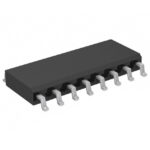 74VHC123AMX
The activity of extra discounts on wholesale prices is in full swing…
Please fill in your contact information and we will send you the latest wholesale price list.





