 ChipApex | Global Electronic Components Supplier
SEARCH
Search Product
Search Post
— IC芯片 | 连接器 | 传感器 | 被动器件 —
Search productSearch post
— IC芯片 | 连接器 | 传感器 | 被动器件 —
Consult the customer manager about the wholesale price.
consultation hotline:86-132-6715-2157
email:[email protected]
Contact the product manager for consultation. One-stop consultation is available.
Do you want a lower wholesale price? Please send us your inquiry and we will reply immediately.
The 74VHCT273ATTR is an octal D-type flip-flop manufactured by STMicroelectronics, belonging to the VHCT logic series. It features positive-edge triggering and a master reset input that forces outputs low independently of clock or data states. The device operates within a supply voltage range of 4.5 V to 5.5 V, with a quiescent current of 4 µA. It supports output drive currents of 8 mA for both high and low states. The component is designed for through-hole mounting in a 20-DIP package.
Verify component authenticity through authorized distributors due to potential counterfeit risks. Confirm package marking matches the 20-DIP specification. Check manufacturing date codes against project lifecycle requirements as availability may vary. Ensure supply chain compliance with RoHS directives. Validate electrical parameters against specific application load conditions before integration.
Select this component when TTL-compatible inputs are required alongside CMOS performance characteristics. The VHCT series bridges HC and HCT logic families, offering faster switching speeds than standard HCT devices. Consider the 20-DIP package for prototyping or applications requiring manual insertion. Evaluate thermal dissipation needs given the 8 mA output drive capability across all eight channels simultaneously.
This part belongs to the 74VHCT family, which combines CMOS speed with TTL input compatibility. Unlike the older 74HC273, the VHCT variant provides improved noise immunity and higher operating frequencies. The 'ATTR' suffix typically denotes specific packaging or tape-and-reel variations, though this specific model is documented in DIP format. It serves as a direct functional replacement for other octal D-flip-flops in legacy designs requiring precise timing control.
CD74HCT273E from Texas Instruments offers similar functionality with comparable pinout and electrical characteristics. SN74HCT273N provides a direct drop-in alternative for through-hole implementations. Verify voltage tolerance and propagation delay specifications match original design constraints when substituting.
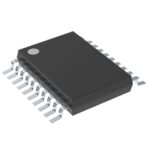 74VHCT273ATTR
The activity of extra discounts on wholesale prices is in full swing…
Please fill in your contact information and we will send you the latest wholesale price list.






