ChipApex | Global Electronic Components Supplier
SEARCH
Search Product
Search Post
— IC芯片 | 连接器 | 传感器 | 被动器件 —
Search productSearch post
— IC芯片 | 连接器 | 传感器 | 被动器件 —
Consult the customer manager about the wholesale price.
consultation hotline:86-132-6715-2157
email:[email protected]
Contact the product manager for consultation. One-stop consultation is available.
Do you want a lower wholesale price? Please send us your inquiry and we will reply immediately.
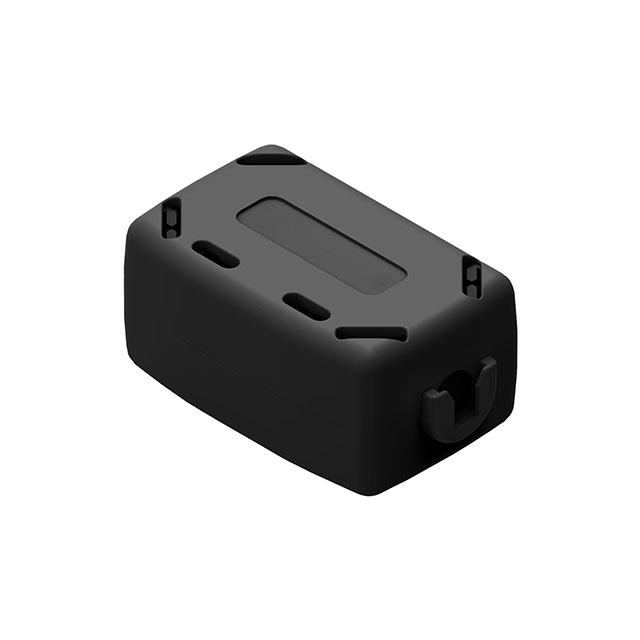
The Würth Elektronik 78271111S is a snap-on ferrite core from the WE-CAR-TEC series, designed for electromagnetic interference suppression. It features an internal aperture diameter of 5 mm and measures 23.4 mm in width. The component utilizes 4W620 ferrite material to provide high impedance across radio frequencies. It exhibits an impedance of approximately 130 Ω at 25 MHz and 316 Ω at 100 MHz. The unit operates within a temperature range of -25 °C to +105 °C and complies with RoHS standards.
Verify the specific impedance values against the official datasheet for the target frequency, as variations may exist between documentation sources. Confirm that the 5 mm aperture accommodates the cable outer diameter including insulation. Ensure the operating temperature range meets the environmental requirements of the final assembly. Check for RoHS compliance declarations if required by the procurement specification.
Select this component when a split-core solution is necessary for retrofitting or testing environments where permanent attachment is not feasible. The 5 mm aperture limits suitability to smaller gauge wires or bundled cables fitting within the dimension. Consider the 316 Ω impedance at 100 MHz for high-frequency noise profiles. Evaluate the mechanical stability of the keyed snap mechanism under vibration conditions compared to adhesive alternatives.
This part belongs to the WE-CAR-TEC series of openable ferrite rings manufactured by Würth Elektronik. These cores are engineered for easy application on cables to suppress electromagnetic interference. The series offers various aperture sizes and impedance characteristics to match different cable diameters and noise frequency spectra, providing a flexible solution for EMC compliance.
Direct substitutes include other Wurth Elektronik snap-on cores with similar 5 mm apertures and comparable impedance curves, such as those from the STAR-TEC series if dimensions permit. Verify that alternative parts maintain the same keyed closure mechanism and operate within the specified -25 °C to +105 °C temperature range.
 78271111S
The activity of extra discounts on wholesale prices is in full swing…
Please fill in your contact information and we will send you the latest wholesale price list.