 ChipApex | Global Electronic Components Supplier
SEARCH
Search Product
Search Post
— IC芯片 | 连接器 | 传感器 | 被动器件 —
Search productSearch post
— IC芯片 | 连接器 | 传感器 | 被动器件 —
Consult the customer manager about the wholesale price.
consultation hotline:86-132-6715-2157
email:[email protected]
Contact the product manager for consultation. One-stop consultation is available.
Do you want a lower wholesale price? Please send us your inquiry and we will reply immediately.
The 78Q2123R/F is a MicroPHY Fast Ethernet transceiver supporting 10BASE-T and 100BASE-TX standards. It integrates MII, ENDECs, scrambler/descrambler, dual-speed clock recovery, and auto-negotiation functions. The device operates from a single 3.3 V ± 0.3 V supply with typical power consumption of approximately 290 mW. It features an on-chip pulse-shaper, low-power line driver, adaptive equalizer, and baseline restoration circuit. The component is housed in a 32-pin QFN package measuring 5 x 5 mm with a height of 0.85 mm. It supports automatic MDI/MDI-X crossover correction and includes two programmable LED indicators.
Verify the specific suffix 'R' against the manufacturer's official documentation to confirm if it denotes a specific tape-and-reel packaging option or a minor revision variant. Ensure the ordering part number matches the exact temperature rating required for the application environment. Cross-reference the datasheet revision history to confirm the document version aligns with the manufactured lot.
Select this component when a compact form factor is critical for embedded Ethernet designs. The integrated MII interface simplifies connection to MAC controllers without external PHY logic. Consider the industrial temperature range (-40°C to +85°C) if the deployment environment exceeds commercial limits. Verify that the system design can accommodate the required dual 1:1 isolation transformers for the MDI interface.
This device belongs to the MicroPHY family of Fast Ethernet transceivers, designed specifically for space-constrained applications. It serves as a physical layer solution for connecting network devices to twisted-pair cabling. The product line emphasizes low power consumption and minimal external component requirements, facilitating simplified PCB layouts for consumer electronics and networking hardware.
The 78Q2123 is the commercial temperature rated counterpart to the 78Q2133. If the application requires operation below 0°C, the 78Q2133 must be used instead. Both share identical pinouts and functional specifications except for the operating temperature range.
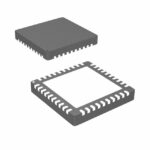 78Q2123R/F
The activity of extra discounts on wholesale prices is in full swing…
Please fill in your contact information and we will send you the latest wholesale price list.





