 ChipApex | Global Electronic Components Supplier
SEARCH
Search Product
Search Post
— IC芯片 | 连接器 | 传感器 | 被动器件 —
Search productSearch post
— IC芯片 | 连接器 | 传感器 | 被动器件 —
Consult the customer manager about the wholesale price.
consultation hotline:86-132-6715-2157
email:[email protected]
Contact the product manager for consultation. One-stop consultation is available.
Do you want a lower wholesale price? Please send us your inquiry and we will reply immediately.
The Harris Corporation 80C286 is a static CMOS microprocessor, serving as the CMOS equivalent of the NMOS 80286. It features an 8-bit external data bus and a 16-bit address bus, packaged in a DIP40 format. The device supports clock frequencies ranging from DC up to 25 MHz, depending on the specific speed grade (e.g., 80C286-25). It operates within a temperature range of -55 °C to 125 °C for industrial/military variants and includes memory management capabilities mapping one gigabyte of virtual address space per task.
Verify the specific suffix indicating clock speed (e.g., -10, -12, -16, -20, -25) as it dictates maximum frequency and current consumption. Confirm package type availability, such as 68-pin PGA or PLCC, against project requirements. Check RoHS compliance status, as older CMOS batches may not meet modern environmental standards. Ensure supply chain authenticity due to the component's vintage manufacturing origin.
Select the appropriate speed grade based on system timing requirements, noting that higher speeds increase maximum ICCOP current significantly. Choose the package style compatible with existing PCB footprints, ensuring thermal dissipation capabilities match the selected clock rate. Verify compatibility with the 80287 co-processor if floating-point operations are required. Consider the wide operating temperature range for harsh environment deployments.
The 80C286 belongs to the Harris Intersil family of advanced microprocessors designed to replace NMOS counterparts with lower power CMOS versions. It maintains upward compatibility with the 8086/88 instruction set while offering enhanced 16-bit processing capabilities. This component bridges legacy architecture with modern real-address mode requirements, supporting both 80C286 Real Address Mode and PVAM.
Public confirmed substitute part numbers include CS80C286-12, CS80C286-25, and CS80C286-20. These variants share identical functional architectures but differ in maximum clock frequency ratings and associated power consumption profiles.
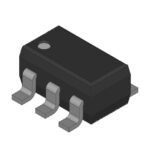 80C286
The activity of extra discounts on wholesale prices is in full swing…
Please fill in your contact information and we will send you the latest wholesale price list.





