 ChipApex | Global Electronic Components Supplier
SEARCH
Search Product
Search Post
— IC芯片 | 连接器 | 传感器 | 被动器件 —
Search productSearch post
— IC芯片 | 连接器 | 传感器 | 被动器件 —
Consult the customer manager about the wholesale price.
consultation hotline:86-132-6715-2157
email:[email protected]
Contact the product manager for consultation. One-stop consultation is available.
Do you want a lower wholesale price? Please send us your inquiry and we will reply immediately.
The 82P33714ANLG8 is a Synchronous Equipment Timing Source (SETS) for Synchronous Ethernet, compliant with ITU-T G.8262 and G.813 standards. It employs DPLL and APLL technologies to provide node clocks for SyncE, cellular base stations, and DSLAMs. The device supports Stratum 3, SMC, 4E, and 4 clock levels with jitter generation below 1ps RMS (12kHz to 20MHz). It features programmable bandwidth from 0.1 Hz to 560 Hz and holdover accuracy of 1.1x10^-5 ppm absolute. The component integrates T0 and T4 DPLLs, supports automatic hitless switching, and accepts various reference inputs including Ethernet, SONET/SDH, and GNSS.
Verify the specific suffix 'ANLG8' against official Renesas documentation to confirm package type and tape-and-reel configuration. Confirm current production status as the base model 82P33714 is marked Not Recommended for New Designs. Ensure compatibility with required external EPROM for boot configuration if processor intervention is not available during startup.
Select this component when strict adherence to ITU-T G.8262/G.813 jitter masks is required for SyncE infrastructure. The integrated DPLL architecture minimizes external components compared to discrete solutions. Verify that the supported input frequencies (10/100/1000/10G Ethernet, OTN, SONET/SDH) match the system's reference sources. Consider the 72-pin QFN package constraints for PCB layout and thermal management.
The 82P33714 belongs to Renesas' Synchronous Equipment Timing Source family designed for high-performance network synchronization. It serves as a central timing hub for managing multiple reference sources and generating precise output clocks for various communication interfaces. The device simplifies design by integrating complex PLL functions and state machines for reference selection into a single chip.
The base part 82P33714 is listed as Not Recommended for New Designs. Consult Renesas for current recommended alternatives within the SETS portfolio. Verify pinout and register compatibility if substituting with newer generations of synchronous Ethernet timing controllers.
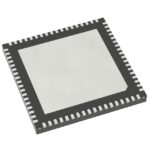 82P33714ANLG8
The activity of extra discounts on wholesale prices is in full swing…
Please fill in your contact information and we will send you the latest wholesale price list.






