 ChipApex | Global Electronic Components Supplier
SEARCH
Search Product
Search Post
— IC芯片 | 连接器 | 传感器 | 被动器件 —
Search productSearch post
— IC芯片 | 连接器 | 传感器 | 被动器件 —
Consult the customer manager about the wholesale price.
consultation hotline:86-132-6715-2157
email:[email protected]
Contact the product manager for consultation. One-stop consultation is available.
Do you want a lower wholesale price? Please send us your inquiry and we will reply immediately.
The Renesas 82P33814ANLG is a Synchronization Management Unit (SMU) designed for IEEE 1588/PTP and Synchronous Ethernet applications. It features three Digital PLLs (DPLLs), where DPLL1 and DPLL2 can operate as Digitally Controlled Oscillators (DCOs) for PTP synthesis, while DPLL3 handles rate conversion. The device accepts differential inputs (IN1-IN4) from 1 PPS to 650 MHz and single-ended inputs (IN5-IN6) up to 162.5 MHz. It supports ITU-T G.8262/G.813, G.8273.2, and GR-253-CORE standards. Outputs include LVDS clocks up to 650 MHz and CMOS outputs up to 125 MHz or N*8 kHz multiples up to 100 MHz. Configuration is managed via I2C, SPI, or UART, with automatic EEPROM loading.
Verify the manufacturer origin, as the datasheet copyright indicates Integrated Device Technology, Inc., which was acquired by Renesas Electronics Corporation. Confirm the specific 'ANLG' suffix requirements against the official ordering guide to ensure correct package and temperature grade specifications. Check for current production status and end-of-life notices.
Select this component when precise management of both packet-based (PTP) and physical layer (SyncE) timing is required on a single chip. Ensure the system clock frequency matches one of the supported TCXO/OCXO options (e.g., 10 MHz, 25 MHz). Verify that the input reference frequencies fall within the 1 PPS to 650 MHz range for differential inputs. Consider the 72-pin QFN package constraints for PCB layout.
This device belongs to the Synchronization Management Unit family, bridging legacy TDM/SyncE timing with modern packet-based synchronization. It serves as a central timing hub in carrier networks, replacing separate clock generators and PTP processors. The transition from IDT to Renesas maintains the functional architecture but may affect supply chain documentation.
Check for direct pin-compatible successors in the Renesas 82P series. Evaluate newer SMU devices with higher output counts or integrated PHYs if network speeds exceed 10G. Verify software register compatibility if migrating from existing IDT designs.
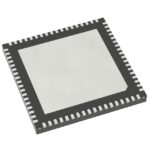 82P33814ANLG
The activity of extra discounts on wholesale prices is in full swing…
Please fill in your contact information and we will send you the latest wholesale price list.






