 ChipApex | Global Electronic Components Supplier
SEARCH
Search Product
Search Post
— IC芯片 | 连接器 | 传感器 | 被动器件 —
Search productSearch post
— IC芯片 | 连接器 | 传感器 | 被动器件 —
Consult the customer manager about the wholesale price.
consultation hotline:86-132-6715-2157
email:[email protected]
Contact the product manager for consultation. One-stop consultation is available.
Do you want a lower wholesale price? Please send us your inquiry and we will reply immediately.
The 83052AGI-01LF is a clock multiplexer integrated circuit manufactured by Renesas Electronics Corporation. It features a 2:2 input-to-output ratio and supports a maximum frequency of 250 MHz. The device accepts LVCMOS or LVTTL input signals and provides corresponding LVCMOS or LVTTL outputs. It operates within a supply voltage range of 2.375 V to 3.465 V and functions reliably across an industrial temperature range of -40°C to +85°C. The component is housed in a 16-TSSOP package with a width of 4.40 mm.
This component is officially listed as End-of-Life (EOL) by the manufacturer, with a discontinuation notification dated June 12, 2020. Verification of current availability should focus on surplus distributors or secondary market sources rather than direct manufacturing orders. Buyers must confirm RoHS3 compliance status and check for any specific packaging changes documented in post-EOL PCNs before procurement.
Designers requiring this specific 2:2 multiplexing function must account for the EOL status when planning long-term production. The device requires a single power supply between 2.375 V and 3.465 V. Ensure that system clock inputs strictly adhere to LVCMOS or LVTTL voltage levels to guarantee proper operation. Alternative components from the same family or newer generations should be evaluated for pin compatibility and electrical parameter alignment.
The 83052AGI-01LF belongs to the 83052A series of clock multiplexers produced by Renesas Electronics. This series is designed for low-skew clock distribution and selection tasks. The part number suffix 'GI' indicates the 16-TSSOP package type, while '01LF' denotes lead-free construction compliant with RoHS standards. It serves as a specialized timing solution within the broader portfolio of Renesas clock and timer ICs.
No public confirmed substitute part numbers are available in the provided documentation. Due to the End-of-Life status, engineers should consult Renesas technical support for recommended functional replacements or evaluate generic 2:2 clock multiplexers with matching 250 MHz speed and TSSOP-16 footprint constraints.
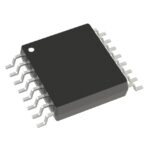 83052AGI-01LF
The activity of extra discounts on wholesale prices is in full swing…
Please fill in your contact information and we will send you the latest wholesale price list.





