 ChipApex | Global Electronic Components Supplier
SEARCH
Search Product
Search Post
— IC芯片 | 连接器 | 传感器 | 被动器件 —
Search productSearch post
— IC芯片 | 连接器 | 传感器 | 被动器件 —
Consult the customer manager about the wholesale price.
consultation hotline:86-132-6715-2157
email:[email protected]
Contact the product manager for consultation. One-stop consultation is available.
Do you want a lower wholesale price? Please send us your inquiry and we will reply immediately.
The 83056AGI-01LF is a low skew, 4:1 multiplexed differential/LVCMOS-to-LVCMOS fanout buffer manufactured by Renesas Electronics Corporation. It features selectable clock inputs that accept either differential or single-ended input levels, including LVPECL, LVDS, LVHSTL, HCSL, SSTL, LVCMOS, and LVTTL. The device provides four LVCMOS outputs with an output impedance of 7 ohms. It supports maximum output frequencies up to 350MHz with a maximum output skew of 35ps and part-to-part skew of 700ps. Additive phase jitter is typically 0.04ps RMS. Power supply modes include Core/Output configurations such as 3.3V/3.3V, 3.3V/2.5V, 3.3V/1.8V, and 3.3V/1.5V. It operates within an ambient temperature range of 0°C to 70°C and is available in a lead-free TSSOP package.
Verify the specific suffix and voltage configuration against current datasheets, as product status may vary. Confirm package dimensions and moisture sensitivity levels prior to integration. Ensure thermal management aligns with the specified operating temperature range. Cross-reference pinouts with official documentation to prevent design errors during PCB layout.
Select this component when low skew and high-frequency operation are critical for system timing integrity. Consider the available power supply modes to match core and output voltage requirements. Evaluate the input signal types to ensure compatibility with existing clock sources. Verify package availability and lead counts for manufacturing constraints.
This component belongs to Renesas' family of High Performance Clock Solutions, specifically designed for precise timing applications. It serves as a fanout buffer and multiplexer, bridging various clock standards to LVCMOS outputs. The device is engineered for reliability in environments requiring strict timing control and signal integrity across multiple channels.
Check for direct footprint-compatible alternatives within the same product family. Verify electrical parameter equivalence, particularly skew and jitter specifications. Ensure pin-to-pin compatibility if board re-spin is not feasible. Consult official substitution guides for recommended upgrades or legacy replacements.
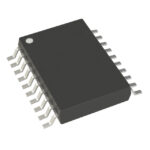 83056AGI-01LF
The activity of extra discounts on wholesale prices is in full swing…
Please fill in your contact information and we will send you the latest wholesale price list.





