 ChipApex | Global Electronic Components Supplier
SEARCH
Search Product
Search Post
— IC芯片 | 连接器 | 传感器 | 被动器件 —
Search productSearch post
— IC芯片 | 连接器 | 传感器 | 被动器件 —
Consult the customer manager about the wholesale price.
consultation hotline:86-132-6715-2157
email:[email protected]
Contact the product manager for consultation. One-stop consultation is available.
Do you want a lower wholesale price? Please send us your inquiry and we will reply immediately.
The 8305AGLF is a low skew, 1-to-4 multiplexed differential/LVCMOS-to-LVCMOS/LVTTL fanout buffer manufactured by Renesas Electronics. It operates within a 0°C to +70°C ambient temperature range and is housed in a 16-pin TSSOP package. The device supports selectable clock inputs, accepting either differential signals (LVPECL, LVDS, LVHSTL, HCSL, SSTL) or single-ended levels (LVCMOS, LVTTL). Key electrical specifications include a maximum output frequency of 350 MHz, a maximum output skew of 35 ps, and a part-to-part skew of 700 ps. Typical additive phase jitter is 0.04 ps RMS.
The 8305AGLF is classified as an obsolete product. Verification of availability should focus on surplus distributors or secondary markets, as standard manufacturing channels no longer support this part number. Confirm RoHS compliance status and specific lot dates when sourcing from non-original suppliers.
Select the 8305AGLF for applications requiring a 1:4 fanout with multiplexed input options. Ensure the design accommodates the specified voltage domains, particularly the 3.3V core requirement. Verify that the 350 MHz maximum frequency meets system requirements and that the 35 ps skew specification satisfies timing constraints.
This component belongs to the 8305 family of high-performance clock solutions. It serves as a fanout buffer designed to drive multiple loads while maintaining signal integrity. The device integrates features for board-level testing via tri-state outputs and ensures stable operation through internal synchronization mechanisms.
As the 8305AGLF is obsolete, verify functional equivalents within the same family or newer generations. Check datasheets for compatible pinouts, voltage levels, and skew specifications to ensure direct replacement viability without circuit redesign.
It supports selectable differential inputs (LVPECL, LVDS, LVHSTL, HCSL, SSTL) and single-ended LVCMOS or LVTTL inputs.
The maximum output frequency is 350 MHz.
The clock enable is internally synchronized to prevent runt pulses on the outputs during asynchronous assertion or deassertion.
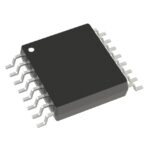 8305AGLF
The activity of extra discounts on wholesale prices is in full swing…
Please fill in your contact information and we will send you the latest wholesale price list.





