 ChipApex | Global Electronic Components Supplier
SEARCH
Search Product
Search Post
— IC芯片 | 连接器 | 传感器 | 被动器件 —
Search productSearch post
— IC芯片 | 连接器 | 传感器 | 被动器件 —
Consult the customer manager about the wholesale price.
consultation hotline:86-132-6715-2157
email:[email protected]
Contact the product manager for consultation. One-stop consultation is available.
Do you want a lower wholesale price? Please send us your inquiry and we will reply immediately.
The TIBPAL20L8-20M is a high-performance programmable array logic device utilizing IMPACT/thin technology. It features a maximum frequency of 41.6 MHz without feedback and 40 MHz with feedback. The supply voltage ranges from 4.5 V to 5.5 V, with a typical operating current of 180 mA. Propagation delays are typically 20 ns for I/O paths and 15 ns for clock-to-Q transitions. The device supports an operating temperature range of -55°C to 125°C.
Verify the specific package variant (FK or JT) against the required pinout diagram, as pin assignments differ between plastic and ceramic carriers. Confirm that the programming equipment supports the titanium-tungsten fuse architecture. Ensure the system design accounts for the specified 180 mA maximum supply current during operation.
Select this device when military-grade temperature stability (-55°C to 125°C) is required alongside high-speed PAL functionality. The L8 suffix indicates a purely combinational logic structure without registered outputs. Compare propagation delay specifications against system timing constraints to ensure compatibility with existing clock frequencies.
This component belongs to the TIBPAL20 series of high-performance IMPACT PAL circuits. It serves as a functional substitute for older PAL20L8 devices but offers improved speed characteristics. The 'M' suffix denotes the military temperature range variant, distinguishing it from the commercial 'C' series which operates from 0°C to 75°C.
The datasheet explicitly states these devices are functionally equivalent but faster than PAL20L8, PAL20R4, PAL20R6, and PAL20R8. Verify that the target application does not require the registered outputs found in the R-series variants if replacing a non-registered design.
Registers are preloaded individually by raising Pin 13 to VIHH, applying the desired data level to the corresponding output pin, pulsing Pin 1 to clock the data, and then lowering Pin 13 back to VIL.
Following power-up, all registers are reset to zero. This feature simplifies state-machine initialization, provided the VCC rise is monotonic and setup times are met before the first clock transition.
No. The maximum frequency of 41.6 MHz applies to the registered variants (TIBPAL20R') without feedback. The TIBPAL20L8 variant does not have a defined fmax because it lacks registered outputs and clock inputs.
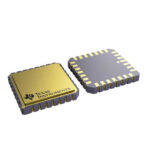 8412901XA
The activity of extra discounts on wholesale prices is in full swing…
Please fill in your contact information and we will send you the latest wholesale price list.





