 ChipApex | Global Electronic Components Supplier

SEARCH
Search Product
Search Post
— IC芯片 | 连接器 | 传感器 | 被动器件 —
Search productSearch post
— IC芯片 | 连接器 | 传感器 | 被动器件 —
Consult the customer manager about the wholesale price.
consultation hotline:86-132-6715-2157
email:[email protected]
Contact the product manager for consultation. One-stop consultation is available.
Do you want a lower wholesale price? Please send us your inquiry and we will reply immediately.
The Renesas 851010AYLF is a 1-to-10 differential HCSL fanout buffer designed to translate various differential input signal levels, including LVPECL, LVHSTL, LVDS, and HCSL, into differential HCSL outputs without requiring external bias networks. Characterized at a full 3.3V supply voltage, the device supports a maximum output frequency of 250MHz. It features an output skew of 165ps (maximum), part-to-part skew of 250ps (maximum), and output drift of 140ps (maximum). The VOH is specified at 850mV (maximum). The component operates within an ambient temperature range of 0°C to 70°C and is available in a lead-free RoHS-compliant package.
The 851010AYLF is classified as an obsolete product by Renesas Electronics Corporation. Availability is restricted, and current stock status indicates limited or no supply. Engineers should verify end-of-life notices and consider replacement strategies for new designs. Sourcing may be limited to secondary market distributors or existing inventory.
This component is suitable for designs requiring a single differential input to drive ten HCSL loads. Selection requires ensuring the system operates at 3.3V and that the input signal type matches the supported formats (LVPECL, LVHSTL, LVDS, HCSL). An external reference resistor must be selected to set the output current, with the load resistor matching the 50Ω characteristic line impedance. Verify thermal requirements against the 0°C to 70°C operating range.
The 851010AYLF belongs to the 851010 series of differential HCSL fanout buffers from Renesas. It shares functional similarities with other models in the family, such as the 851021, which offers 21 outputs. These devices are engineered for high-speed clock distribution where signal integrity and level translation are critical. The 'AYLF' suffix denotes the specific package and lead-free compliance variant.
Public confirmed substitute part numbers are not provided in the source material. Due to the obsolete status, alternative components from the same family or different manufacturers must be evaluated based on pin compatibility, electrical specifications, and application requirements.
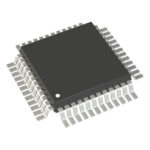 851010AYLF

The activity of extra discounts on wholesale prices is in full swing…
Please fill in your contact information and we will send you the latest wholesale price list.




